As companies strengthen their ESG commitments, every stage of the technology lifecycle is coming under greater scrutiny, including what happens when IT assets reach the end of their useful life. For IT asset disposal teams, the focus is no longer limited to secure data destruction and regulatory compliance.
Organizations increasingly expect disposal programs to support broader sustainability objectives through reuse, responsible recycling, transparent reporting, and ethical supply chain practices. The choices made during the ITAD process can influence carbon reduction efforts, reduce electronic waste, and contribute to stronger governance standards. Understanding this connection helps disposal teams evolve from operational support functions into strategic contributors to corporate ESG performance.
Before exploring how ESG goals reshape IT asset disposal, it helps to clarify a few core terms. These concepts form the foundation of responsible ITAD practices and are frequently used in sustainability reporting, compliance frameworks, and vendor assessments.
- ESG (Environmental, Social, Governance): A framework used to measure a company’s environmental impact, social responsibility, and governance practices.
- IT Asset Disposition (ITAD): The secure and responsible process of retiring, recycling, remarketing, or disposing of IT equipment.
- Circular Economy: A model that keeps products and materials in use for as long as possible through reuse, refurbishment, and recycling.
- E-Waste: Discarded electronic equipment that requires safe handling to avoid environmental and health risks.
- Data Sanitization: The process of permanently removing or destroying data from devices before reuse or disposal.
- Chain of Custody: A documented record tracking an asset from collection to final disposition to ensure security and compliance.
- Scope 3 Emissions: Indirect emissions across a company’s value chain, including those linked to equipment disposal and manufacturing.
- Asset Remarketing: The resale or reuse of retired IT equipment to recover value and extend product life.
- Extended Producer Responsibility (EPR): Policies that hold manufacturers accountable for the entire lifecycle of their products, including disposal.
- R2 Certification: A globally recognized standard for responsible electronics recycling and reuse practices.
Why IT Asset Disposal Has Become an ESG Priority
IT asset disposal is no longer viewed as a back-end operational task that simply involves removing outdated devices from circulation. As businesses strengthen their ESG commitments, how they manage retired technology reflects their environmental responsibility, governance standards, and long-term sustainability strategy.
1. The Environmental Impact of Retired Technology
The rapid pace of technological advancement means organizations regularly replace laptops, servers, smartphones, and other devices. Without proper disposal practices, these assets can contribute to the growing global e-waste problem.
According to the Global E-waste Monitor 2024, the world generated 62 million tonnes of e-waste in 2022, yet only 22.3% was formally collected and recycled through documented systems. This figure is expected to rise significantly in the coming years if current consumption patterns continue.
Global e-waste concerns include:
- Valuable materials ending up in landfills instead of being recovered.
- Increased demand for virgin resources to manufacture new devices.
- Environmental pollution caused by improper disposal methods.
- Lost opportunities to extend the useful life of functioning equipment.
These challenges have prompted organizations to rethink e-waste management and adopt more sustainable approaches to handling end-of-life technology.
2. Rising Expectations Around Responsible E-Waste Management
Stakeholders increasingly expect businesses to demonstrate accountability for the entire lifecycle of their IT assets. Investors, customers, employees, and regulators want evidence that electronic waste is being managed responsibly.
This has led many organizations to prioritize the following:
- Certified e-waste recycling programs.
- Transparent chain-of-custody documentation.
- Secure data destruction processes.
- Vendor partnerships that align with ethical and environmental standards.
- Asset recovery initiatives focused on reuse before recycling.
At the same time, concerns around cybersecurity risks have become more prominent. Devices containing residual data can expose organizations to breaches, financial losses, and reputational damage if they are not properly sanitized before disposition.
3. The Connection Between ITAD and Corporate Sustainability Goals
Many companies now recognize that IT asset disposal can support broader sustainability objectives rather than functioning as a standalone compliance activity.
An effective ITAD strategy can contribute to ESG goals by:
- Diverting reusable equipment away from landfills.
- Supporting circular economy initiatives through refurbishment and redeployment.
- Reducing waste associated with frequent technology refresh cycles.
- Providing measurable data for ESG reporting.
- Creating opportunities for monetizing retired IT assets through remarketing programs.
Organizations are also paying closer attention to IT equipment depreciation. Delaying disposition can reduce resale value and limit opportunities to recover costs from retired assets. By integrating ITAD into asset lifecycle planning, businesses can maximize financial returns while advancing their sustainability commitments.
As ESG expectations continue to evolve, IT asset disposal teams are increasingly being recognized as important contributors to both operational efficiency and corporate responsibility.
How ITAD Supports Each Pillar of ESG
ESG is often discussed at the executive level, but its success depends heavily on operational teams translating commitments into measurable actions. IT asset disposal teams play a direct role in advancing each ESG pillar through the decisions they make every day, from selecting disposal partners to determining whether assets should be reused, remarketed, or recycled.
• Environmental: Reducing Waste and Conserving Resources
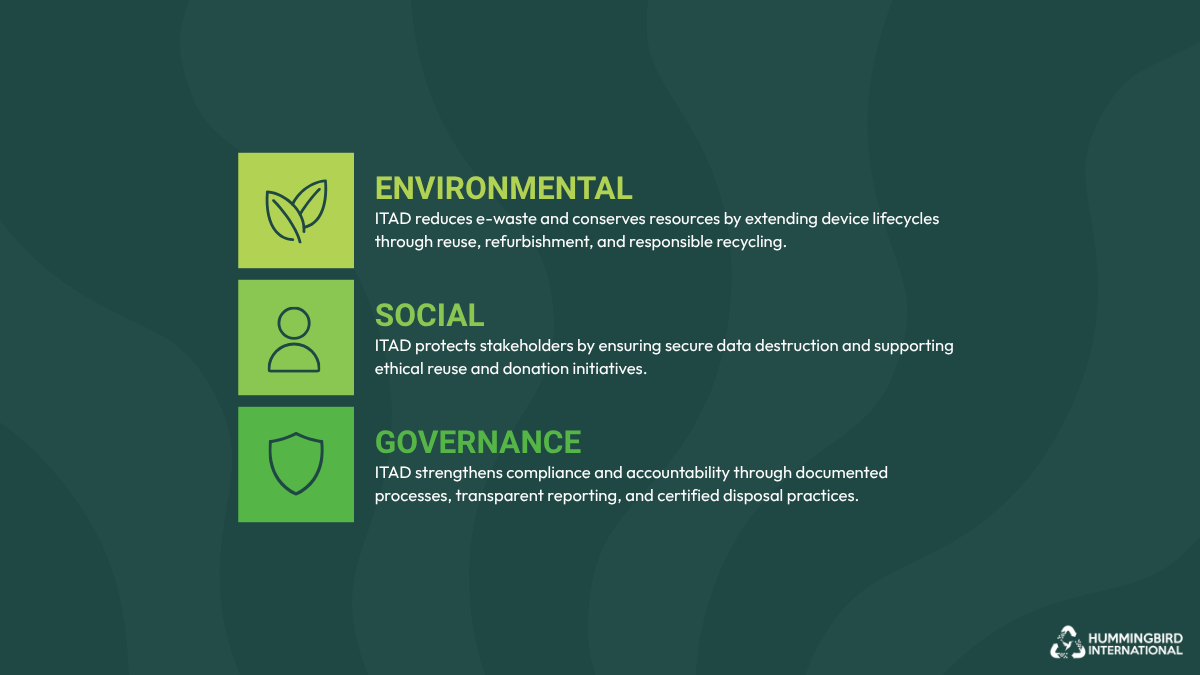
The environmental aspect of ESG focuses on minimizing a company’s impact on the planet. In the context of ITAD, this means extending the life of devices whenever possible and ensuring responsible handling when equipment reaches the end of its useful life.
Practices such as refurbishment, redeployment, and enterprise e-waste recycling help divert electronics from landfills and recover valuable materials that can re-enter the supply chain. These efforts also support circular economy initiatives by reducing demand for newly manufactured products and the raw materials required to produce them.
• Social: Protecting People and Communities
The social component of ESG addresses how organizations affect employees, customers, and the communities they serve. For ITAD teams, one of the most significant responsibilities is safeguarding sensitive information.
Improper disposal practices can expose organizations to serious cybersecurity risks in e-waste, particularly when devices containing confidential data are discarded without effective sanitization procedures. Secure data destruction protects stakeholders while reinforcing trust in the organization’s handling of personal and business information.
Social responsibility may also extend to ethical vendor selection and donation programs that redirect functional equipment to schools, nonprofits, or underserved communities.
• Governance: Strengthening Accountability and Compliance
Governance focuses on the policies, controls, and oversight mechanisms that guide business decisions. Effective ITAD programs contribute to stronger governance through detailed documentation, transparent reporting, and clearly defined processes.
Maintaining chain-of-custody records, verifying downstream recycling practices, and partnering with certified providers help organizations demonstrate due diligence. These measures not only support regulatory compliance but also provide evidence that ESG commitments are being implemented in practice rather than remaining aspirational goals.
As reporting expectations continue to evolve, strong governance within ITAD programs will become increasingly important in helping organizations substantiate their sustainability claims and manage operational risks.
| ESG Pillar | How ITAD Teams Support It |
| Environmental | Extending device lifecycles through reuse, prioritizing refurbishment, partnering with certified recyclers, and recovering valuable materials from retired equipment. |
| Social | Protecting sensitive data through secure destruction practices, working with vendors that follow ethical labor standards, and facilitating technology donation initiatives that benefit communities. |
| Governance | Maintaining chain-of-custody records, documenting disposal activities for audits and ESG reporting, conducting vendor due diligence, and ensuring compliance with relevant regulations and internal policies. |
What ESG-Focused ITAD Teams Are Doing Differently
Organizations that take ESG seriously are changing the way they approach IT asset disposal. Rather than treating it as a one-time end-of-life activity, they are embedding sustainability, accountability, and transparency into every stage of the disposition process. These shifts not only support ESG commitments but also help businesses reduce waste, manage risks, and extract greater value from retired technology.
1. Prioritizing Reuse Before Recycling
ESG-focused ITAD teams recognize that the most sustainable device is often the one that remains in use. Whenever possible, they refurbish, redeploy, or remarket equipment before considering recycling options. This approach converts e-waste into eco-friendly products, extends product lifecycles, and reduces demand for new resources.
2. Tracking Environmental Outcomes
Modern ITAD programs increasingly measure the environmental impact of their activities. Teams monitor metrics such as landfill diversion rates, assets reused, and materials recovered to demonstrate how their efforts contribute to organizational sustainability goals.
3. hoosing Certified Disposal Partners
Vendor selection has become an important part of ESG strategy. Organizations are seeking ITAD providers with recognized certifications and transparent processes that reflect responsible recycling practices, secure data handling, and ethical downstream management.
4. Incorporating ESG Metrics Into Procurement Decisions
Many businesses now consider end-of-life outcomes during the purchasing stage rather than waiting until assets are retired. Procurement teams may evaluate factors such as repairability, reuse potential, and vendor sustainability commitments when selecting new technology.
5. Producing Documentation for Sustainability Reporting
As ESG reporting expectations continue to grow, ITAD teams are being asked to provide clear evidence of their activities. Detailed records related to asset disposition, data destruction, recycling outcomes, and chain of custody help organizations support internal audits and external disclosures.
ESG Metrics IT Asset Disposal Teams Should Monitor
As ESG reporting becomes more data-driven, organizations need measurable indicators to evaluate the effectiveness of their ITAD programs. Tracking the right metrics helps businesses demonstrate progress, identify areas for improvement, and provide evidence that sustainability commitments are being translated into action.
-
Percentage of Assets Reused
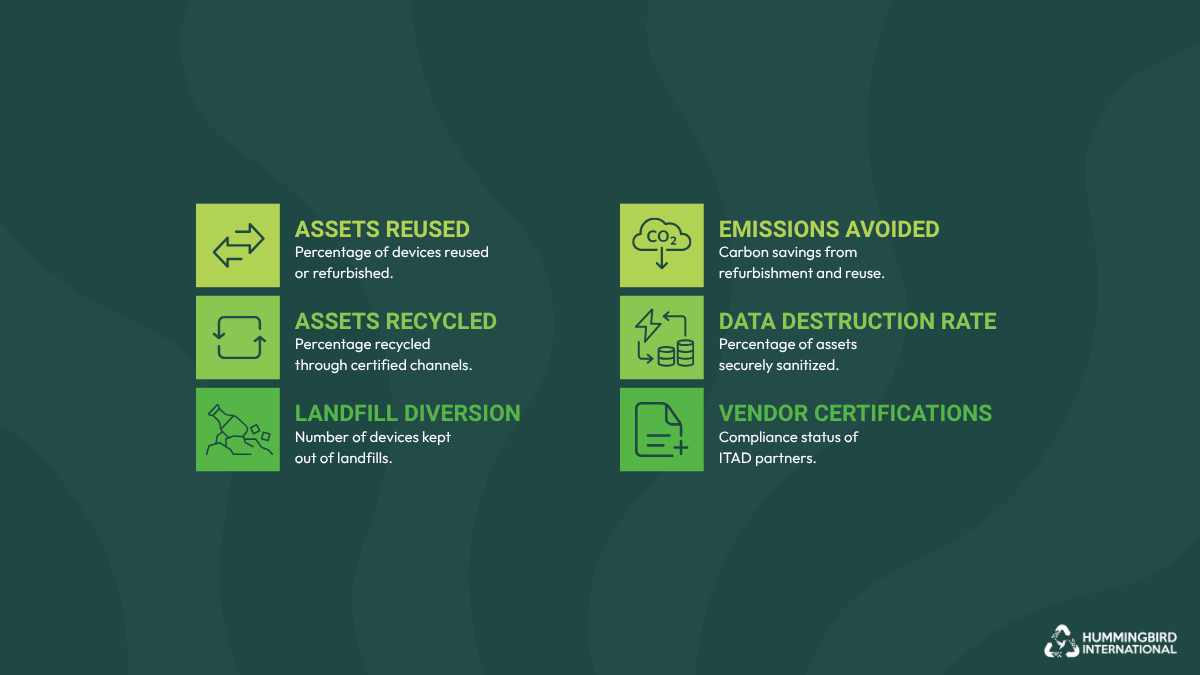
This metric measures how many retired devices are refurbished, redeployed internally, or remarketed rather than discarded. Higher reuse rates often indicate stronger alignment with circular economy principles.
• Percentage Recycled Responsibly
Not all recycling processes follow the same standards. Monitoring the proportion of assets processed through certified recycling channels helps organizations verify that materials are being handled ethically and in accordance with environmental regulations.
• Number of Devices Diverted From Landfill
This figure highlights the volume of equipment kept out of landfills through reuse, refurbishment, or responsible recycling initiatives. It provides a tangible way to communicate environmental impact.
• Carbon Emissions Avoided Through Refurbishment
Extending the life of existing devices can reduce the emissions associated with manufacturing new equipment. Tracking avoided emissions helps organizations understand the broader climate benefits of their ITAD strategies.
• Data Destruction Success Rates
Organizations should measure the percentage of assets that undergo verified data sanitization or destruction procedures without incidents. Strong performance in this area supports both governance objectives and stakeholder trust.
• Vendor Certification Status
Maintaining visibility into the certifications held by ITAD partners helps ensure disposal practices meet recognized industry standards. Certifications may also support audit requirements and ESG disclosures.
| Traditional ITAD Focus | ESG-Driven ITAD Focus |
| Secure disposal of retired assets | Secure and environmentally responsible asset disposition |
| Meeting minimum regulatory requirements | Supporting compliance while contributing to ESG reporting efforts |
| Reducing immediate operational costs | Creating long-term environmental and business value |
| Recycling assets at end of life | Prioritizing reuse and refurbishment before recycling |
| Maintaining basic transaction records | Providing transparent reporting on outcomes and impact |
| Viewing ITAD as an operational necessity | Recognizing ITAD as a contributor to corporate sustainability goals |
| Focusing primarily on data security | Balancing data security, environmental responsibility, and governance expectations |
Choosing an ITAD Partner That Aligns With ESG Goals
Selecting the right IT asset disposition partner has become a critical decision for organizations working to meet ESG targets. It is no longer enough to focus only on cost efficiency or basic compliance. Companies now need partners who can demonstrate transparency, environmental responsibility, and strong governance practices across the entire disposal lifecycle.
This is where choosing a certified ITAD partner becomes an important part of a broader sustainability strategy, ensuring that retired assets are handled in a way that supports both regulatory expectations and ESG reporting needs.
Certifications to Look For
Certifications are one of the most reliable indicators of whether an ITAD provider follows responsible and standardized practices. They help organizations verify that environmental, security, and operational processes meet recognized industry benchmarks.
A globally recognized standard for responsible recycling and reuse of electronics, focusing on environmental safety and data security.
A strict certification that prohibits exporting hazardous e-waste to developing countries and enforces strong environmental and worker protections.
An environmental management standard that ensures structured systems are in place to minimize environmental impact.
- NAID AAA (for data destruction)
A leading certification for secure data destruction services, ensuring strict controls over sensitive information handling.
Questions Organizations Should Ask Vendors
Beyond certifications, organizations should actively evaluate how ITAD partners operate in practice. Asking the right questions helps uncover whether a vendor’s processes truly align with ESG expectations.
- How are downstream vendors vetted?
Understanding the full chain of processing ensures that assets are not ending up with unverified or non-compliant third parties.
- What percentage of assets are reused?
This helps assess how effectively the vendor prioritizes refurbishment and reuse over recycling or disposal.
- What reporting capabilities are available?
Strong reporting systems are essential for ESG disclosures, audits, and internal sustainability tracking.
- How is data destruction documented?
Clear documentation provides proof of secure data handling and supports governance and compliance requirements.
The Future of ESG and ITAD
ESG goals are transforming IT asset disposal from a back-office necessity into a strategic business function. By prioritizing reuse, responsible recycling, secure data handling, and transparent reporting, ITAD teams can help organizations reduce environmental impact while strengthening governance practices. As stakeholder expectations continue to grow, companies that integrate ESG principles into their disposal programs will be better positioned to demonstrate accountability and long-term value.
FAQs
1. What is the relationship between ESG and IT asset disposal?
ESG and IT asset disposal are closely linked because disposal practices directly affect environmental impact, data security, and governance standards. ITAD teams support ESG goals by extending device life, ensuring responsible recycling, and maintaining transparent reporting throughout the asset lifecycle.
2. What certifications should organizations look for in an ITAD provider?
Key certifications include R2, e-Stewards, ISO 14001, and NAID AAA. These standards help verify that an ITAD provider follows responsible environmental practices, secure data handling procedures, and compliant recycling methods.
3. How does ITAD contribute to environmental sustainability?
ITAD reduces environmental harm by prioritizing reuse, refurbishment, and certified recycling of electronics. This helps divert e-waste from landfills, recover valuable materials, and lower the demand for new resource extraction and manufacturing.
4. What is the biggest ESG risk in IT asset disposal?
One of the biggest risks is improper handling of retired devices, which can lead to data breaches and environmental harm. Without proper controls, organizations may also fail to meet ESG reporting expectations or lose visibility into downstream disposal practices.