
When IT assets are no longer usable, ITAM hands them over to ITAD teams for secure processing, reuse, resale, recycling, or destruction. The handover should transfer not only the physical assets, but also accurate records, custody, and accountability.
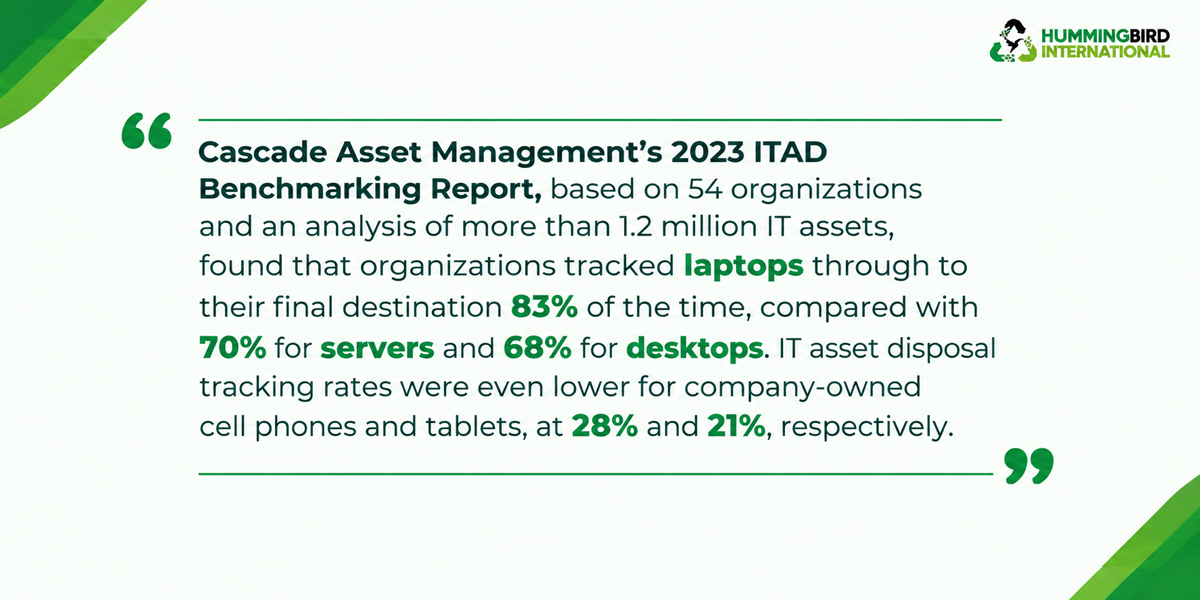
But such handovers are not always as complete as they should be. Cascade Asset Management’s 2023 ITAD Benchmarking Report, based on 54 organizations and an analysis of more than 1.2 million IT assets, found that organizations tracked laptops through to their final destination 83% of the time, compared with 70% for servers and 68% for desktops. IT asset disposal tracking rates were even lower for company-owned cell phones and tablets, at 28% and 21%, respectively.
So, how should ITAM hand an asset over to ITAD, and what needs to be documented to keep ownership and accountability intact? Let’s start with a clear understanding of ITAM and ITAD and then walk through what a controlled handover should look like.
How Are ITAM and ITAD Connected?
ITAM is a process to track every asset’s lifecycle, from purchase to use and retirement. This tracking is maintained by the organization and is then shared with the ITAD partner when the equipment reaches end of life.
On the other hand, ITAD handles the retired equipment’s disposition, such as data destruction, reuse, resale, recycling, or disposal. The final route of the retired asset is determined mutually according to the organization’s requirements and the ITAD provider’s assessment.
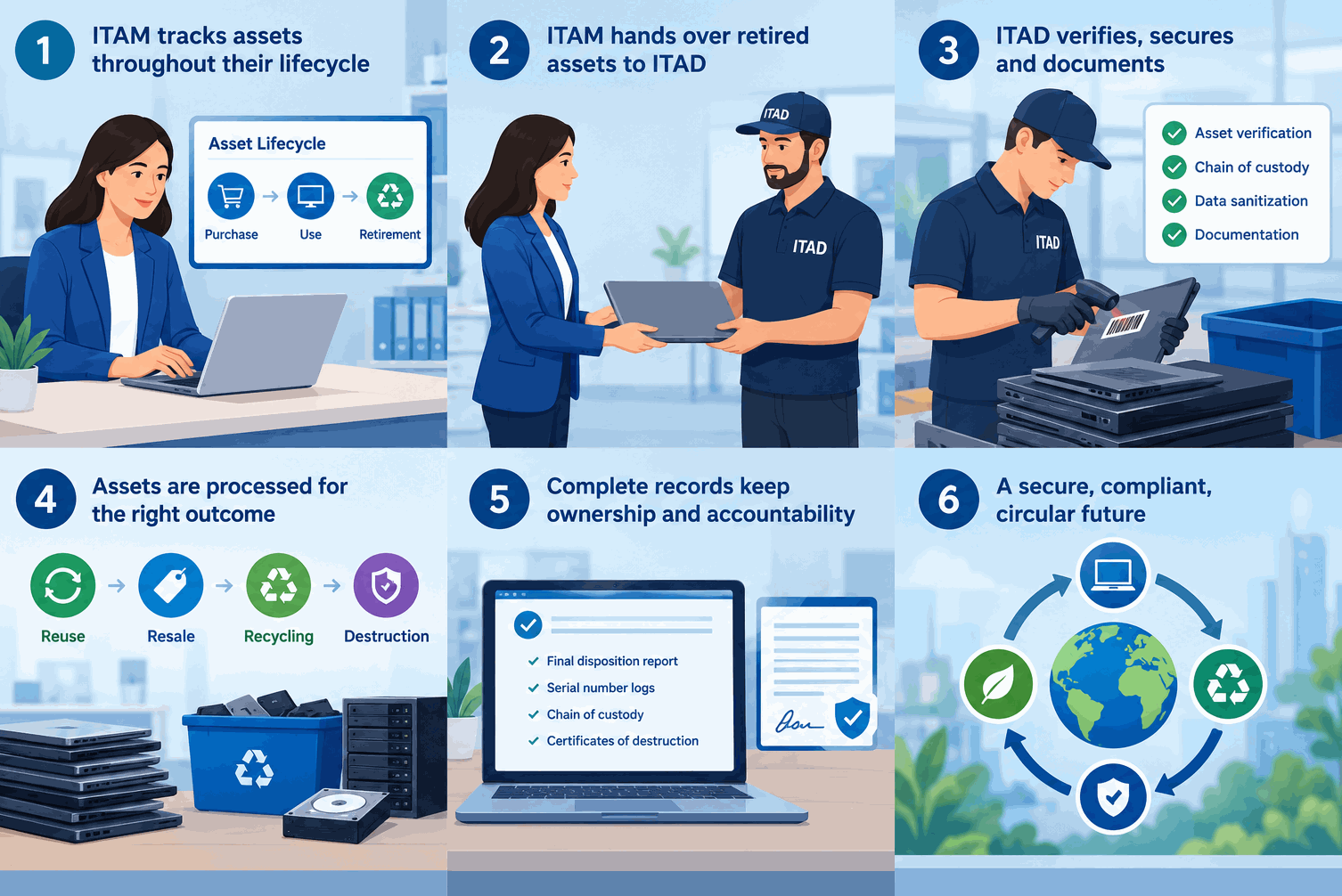
Moreover, ITAM outlines equipment that the organization owns, the location of each asset, the responsible party, and the retirement date of assets. ITAD uses this information to take custody and verify the equipment received, maintain the chain of custody, perform required data sanitization or destruction, and document the final disposition.
| ITAM | ITAD |
| Handle IT equipment during lifecycle | Handle IT equipment after retirement |
| Keep records of asset inventory and ownership | Verify received assets against records |
| Track asset location and status | Track custody and movement during disposition |
| Identify assets for retirement | Performs disposition activities (such as data destruction, etc) |
| Updates asset records after retirement | Provides certificates, audit records, and disposition reports |
How ITAM and ITAD Gaps Create Risk During Data Center Decommissioning
The link between ITAD and ITAM becomes more critical during hyperscale data center decommissioning. That’s because when several assets from various categories retire at once, a small mismatch between ITAM records and physical assets can lead to huge gaps in security and compliance, along with financial risk.
Security
If surplus data-bearing devices are not properly identified or tracked, assets might be misplaced or sent for further processing without the required data sanitization or destruction method.
Compliance
Organizations may require evidence that retired equipment was handled according to the internal policies, contracts, and data protection protocols. If accurate records are missing, tracking an asset from retirement to final disposition becomes harder.
Financial Risk
Inaccurate records can lead to assets being overlooked, wrongly classified, or sent for low-value disposition, while they could have been remarketed or redeployed.
Possible Breakdowns During ITAM Handover
When ITAM hands over assets to ITAD, gaps in records, ownership, or handover documentation can result in breakdowns in asset tracking and accountability. This part of the guide covers the process of handing over IT equipment and where records, ownership, and accountability can break down.
1. When IT Assets Are Identified for Disposal
ITAM identifies the retired assets. At this stage, the ITAM system should take care of key details like the asset ID, serial number, device type, location, owner, and current status. Organizations may use different methods to track assets, like portals, spreadsheets, manual logs, barcodes, RFID systems, or a combination of these.
Where the Process Can Break Down
If the ITAM record is incomplete, outdated, or doesn’t match the physical equipment, the organization may struggle to verify what is actually being retired.
This is a common challenge. A 2026 Ponemon-Sullivan study found that only 48% of respondents were highly confident that their organization had a comprehensive, up-to-date list of its hardware, software, and other equipment. Only 30% said their asset inventories were updated daily or monthly.
From an ITAM-to-ITAD handover point of view, this means the quality of the ITAD handoff depends heavily on the accuracy of the information ITAM provides in the first place.
Solution
Before handing over assets to ITAD, organizations should verify ITAM records against physical equipment. This includes verifying asset IDs and serial numbers, confirming the asset’s location and status, and addressing any conflicting information. This step can help identify missing, duplicate, or incorrectly recorded assets before they enter the next step.
Learn More: How to Retire Your Business Laptop Fleet End to End
2. When Ownership and Custody Are Confirmed
Before the handover, ITAM should confirm who owns the equipment and who currently has physical custody of it. For example, a laptop may belong to the company but still be assigned to an employee. A server may belong to the IT department while physically sitting in a data center operated by another team.
Where the Process Can Break Down
Responsibility and custody become unclear when records do not reflect the current user, department, or location. The organization may know that the equipment exists but not know who is responsible for returning it or making it available for ITAD. This can become even more difficult when equipment is distributed among remote workers across multiple locations.
For example, Cascade’s 2025 ITAD Benchmarking Report identified reclaiming devices from remote employees and remote locations as an issue raised by respondents. The handover should establish a clear point at which responsibility moves from the current custodian to the ITAM or ITAD team.
Solution
Organizations can create a central system that clarifies responsibilities and deadlines. Employees can receive return requests, and managers can confirm that assets have been returned. Meanwhile, IT teams can track outstanding assets, and if any equipment is unreturned, it should be flagged and resolved before the ITAD handoff. In the case of remote or distributed assets, scheduled pickups, shipping labels, and local drop-off points can facilitate device collection.
3. When the Asset is Physically Handed Over
After the confirmation of ownership and custody, assets are picked up from their current location and transported to the designated processing facility. Before pickup, the equipment should be matched against the handover list, such as asset IDs or serial numbers. The transfer document should also include who released the assets, who picked them up, when they were collected, and where they are being taken. This helps create a chain of custody while the equipment is in transit.
Where the Process Can Break Down
A shortfall may emerge if equipment leaves one team’s control before the transfer is properly documented. If there is no clear handover record, it may become difficult to establish who was responsible for the equipment during transportation or before ITAD received it.
This is particularly important for data-bearing equipment because it may still contain sensitive information before sanitization or destruction.
Solution
Assets should be assigned to a pickup batch; each item should be verified before it leaves the site. The receiving party should verify the shipment against the pickup list when it arrives. Missing assets should be flagged and investigated before further processing.
Breakdown During ITAD Reconciliation and Verification
Catching missing, mismatched, or incorrectly recorded assets at this stage can prevent security, compliance, and financial issues from carrying forward into final disposition.
1. ITAD Reconciles the Assets
After receiving the equipment, ITAD should match the equipment with the information provided by ITAM.
The serial number, asset ID, device type, and other identifying details should match the handover records. Any missing, additional, or mismatched items should be investigated before processing continues.
Where the Process Can Break Down
This is one of the most important reconciliation points in the entire handover. If ITAD receives something that doesn’t match the ITAM records, the issue needs to be identified and resolved before further processing.
Cascade’s 2025 ITAD Benchmarking Report found that respondents reported tracking 81% of laptops, 79% of servers, and 71% of desktops when “all” and “some” tracking responses were combined.
These figures do not mean the remaining equipment was lost. They show that organizations do not consistently report tracking every device category throughout its lifecycle, making reconciliation an important part of the handover.
Solution
Upon asset arrival, ITAD should complete an intake reconciliation before any equipment moves for processing. The received shipment should be matched against the ITAM handover list, and mismatched equipment should be placed on hold for investigation. The reconciled inventory list can be used for further tracking of equipment through data destruction, remarketing, recycling, and other disposition.
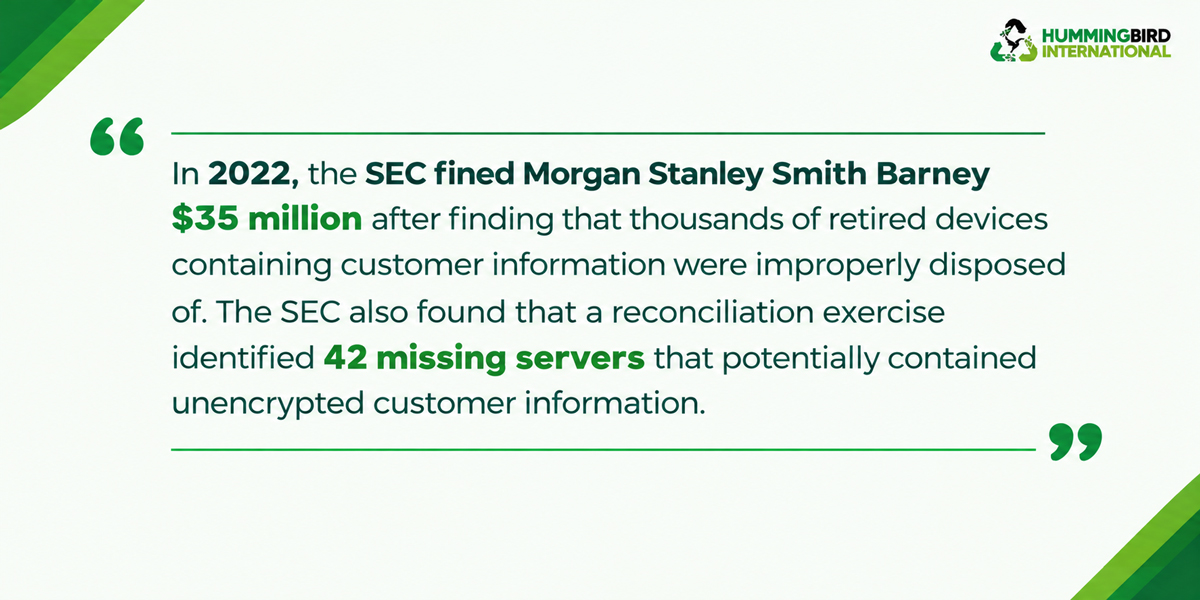
A real-world case shows how costly these gaps can become. In 2022, the SEC fined Morgan Stanley Smith Barney $35 million after finding that thousands of retired devices containing customer information were improperly disposed of. The SEC also found that a reconciliation exercise identified 42 missing servers that potentially contained unencrypted customer information.
2. When ITAD Processes the Equipment
Once the equipment is reconciled, ITAD determines the appropriate processing route. Depending on its condition and the organization’s requirements, it may be sanitized and reused, refurbished and resold, recycled, or physically destroyed.
Where the Process Can Break Down
At this point, the organization needs to be able to connect the equipment received by ITAD to its processing outcome. For data-bearing equipment, records should show what sanitization or destruction method was used and provide evidence that the required process was completed.
Without verification, data-bearing IT equipment may be passed on to other organizations while still containing sensitive information. For example, Dynamic Lifecycle Innovations found recoverable information on a networking device that had been sold as securely wiped, showing why processing records and verification matter.
Solution
A clear record should be maintained showing how each asset was processed and its next destination. For data-bearing equipment, records should verify that the decided sanitization or destruction method was completed.
Learn More: Why ‘Wiped’ Devices Still Fail IT Audit Standards?
3. When Disposition is Documented, and ITAM Records Are Updated
After processing is complete, ITAD should document the final outcome.
The record should show whether the equipment was reused, resold, recycled, or destroyed. Where applicable, it should also include data-sanitization records, Certificates of Destruction, or other evidence required by the organization’s policies.
Where the Process Can Break Down
The handover is not complete simply because ITAD processed the equipment. The organization also needs evidence that connects the final disposition to the correct serial number or other identifier.
Without that connection, ITAM may know that equipment was sent to ITAD but still lack proof of what happened to each item.
Hummingbird provides compliance certificates, and certifications are an example of this type of documentation, including Certificates of Destruction, serial-number logs, signed chain-of-custody records, and NIST SP 800-88 verification logs.
Solution
ITAD should provide a final disposition document that links each asset to its outcome using the asset’s ID and serial number. This information can be used to update ITAM records and mark assets as reused, resold, recycled, or destroyed.
Conclusion
The journey of assets from ITAM to ITAD is more than equipment transfer. It is a continuous process with several endpoints. A gap at any stage can make it difficult to know where the asset is, or whether its data was handled properly.
Therefore, it is important that ITAM records are accurately maintained and updated, custody is clearly transferred, ITAD reconciles physical equipment against the list, and every processing outcome is recorded.
Looking for an ITAD/ITAM partner to help with handovers?
Frequently Asked Questions (FAQs)
1. When is the ITAM to ITAD handover considered complete?
The handover is marked complete when:
- The physical equipment has been reconciled
- Custody has been documented
- Required processing has been completed
- Final disposition has been recorded
- ITAM has been updated with the supporting documentation
2. What should an ITAD reconciliation report include?
An ITAD reconciliation report should include:
- Assets expected
- Assets arrived
- Discrepancies identified
- Resolution status
Useful fields may further include information like:
- Asset ID
- Serial number
- Device type
- Expected quantity
- Received quantity
- Exception type
- Final resolution
3. What should an organization do if an asset cannot be located before ITAD handover?
In this case, the last known location and custodian of the equipment should be checked.
4. How does chain of custody connect with ITAM records?
The chain of custody summarizes the movement history of an asset after retirement. Each transfer should identify the asset or batch, releasing party, receiving party, date and time, location, and relevant transfer documentation.