
Technology has become an essential part of modern education. From classroom laptops and tablets to interactive displays and computer labs, schools rely on electronic devices every day. But as technology evolves, older equipment quickly becomes outdated, leaving schools with a growing pile of unused or broken electronics. According to the UN Global E-waste Monitor, the world generated 62 million metric tonnes of e-waste in 2022, yet only 22.3% was formally collected and recycled.
For many schools, these devices end up collecting dust in storage rooms because staff aren’t sure how to dispose of them safely. Others are discarded without realizing they contain valuable materials that can be recovered or hazardous components that require proper handling. As schools continue investing in digital learning, managing electronic waste is becoming just as important as purchasing new technology.
E-waste recycling benefits schools by protecting the environment, recovering resources, enhancing data security, and creating learning opportunities. This guide covers its key advantages and why it should be a vital part of tech management.
What Is E-Waste in Schools?
Electronic waste, commonly called e-waste, refers to any electrical or electronic device that is no longer useful, working, or needed. This includes equipment that is broken, outdated, replaced with newer technology, or cannot be repaired economically.
Schools generate a wide variety of e-waste as technology is regularly upgraded to meet changing educational needs. Some of the most common examples include:
• Computers and Laptops
Desktop computers and laptops are among the largest sources of school e-waste. Devices that struggle to run current software, have failing hardware, or no longer receive security updates are often replaced every few years. While they may no longer be suitable for classroom use, many of their components, such as aluminum, copper, and precious metals, can still be recovered through recycling.
• Tablets and Interactive Smartboards
Many schools now use tablets and interactive smartboards to support digital learning. As newer models offer better performance and features, older devices are phased out. Damaged screens, worn-out batteries, and outdated operating systems also contribute to the growing number of retired devices.
• Printers and Scanners
Although many schools are moving toward digital workflows, printers, scanners, photocopiers, and multifunction devices remain essential. These machines eventually wear out or become too expensive to maintain, making them another common source of electronic waste.
• Cables, Keyboards, and Other Accessories
E-waste isn’t limited to large equipment. Keyboards, mice, headphones, chargers, power adapters, cables, routers, projectors, webcams, and external storage devices are also frequently replaced due to wear, damage, or compatibility issues. While these items may seem small, they add up quickly across an entire school campus.
Why Schools Need an E-Waste Recycling Program
As classrooms become more technology-driven, schools are replacing electronic devices more frequently than ever before. Without a clear recycling program, outdated equipment can pile up in storage rooms, increase disposal costs, and create unnecessary environmental and security risks. A structured e-waste recycling program helps schools manage these devices responsibly while supporting broader operational and sustainability goals.
1. The Number of Outdated Devices Keeps Growing
Technology has a relatively short lifecycle. New software often requires more powerful hardware, operating systems stop supporting older devices, and schools regularly upgrade equipment to improve learning experiences.
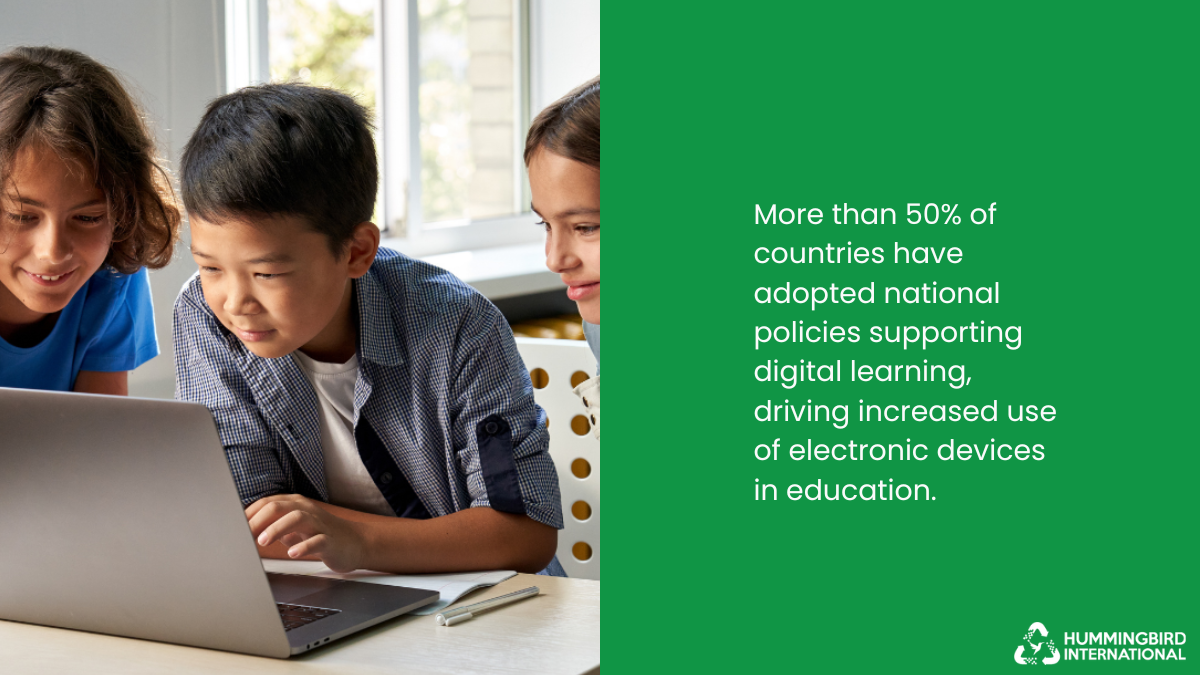
According to UNESCO, over 50% of countries have introduced national policies supporting digital learning, which continues to increase the number of electronic devices used in education. As digital classrooms expand, so does the amount of equipment that eventually reaches the end of its useful life.
2. Protecting the Health and Environment
Electronic devices contain materials that should never be mixed with regular household waste. Components may include substances such as lead, mercury, and cadmium, which can contaminate soil and water if disposed of improperly.
At the same time, electronics also contain recyclable materials like gold, copper, and aluminum that can be recovered and reused, reducing the need for new raw material extraction and lowering environmental impact.
3. Meeting Legal and Ethical Responsibilities
Many regions have regulations that require organizations, including schools, to dispose of electronic waste responsibly. Schools also store sensitive information, including student records, staff data, and administrative files, on computers and storage devices.
Recycling through certified providers helps ensure that data is securely destroyed before equipment is processed, reducing the risk of data breaches while supporting compliance with privacy and environmental regulations.
4. Supporting Long-Term Sustainability Goals
Many schools are working toward greener campuses by reducing waste and teaching students about environmental responsibility. An e-waste recycling program supports these efforts by keeping reusable materials in circulation instead of sending them to landfills.
It also provides a practical example of responsible resource management, allowing schools to demonstrate sustainability through action rather than simply teaching it in the classroom.
Key Benefits of E-Waste Recycling for Schools
E-waste recycling isn’t just about clearing out old computers or broken devices. It helps schools manage technology more responsibly while creating environmental, financial, educational, and operational benefits. Here are some of the biggest advantages.
1. Reduces Environmental Impact
Proper electronics recycling allows for the recovery of valuable materials, preventing them from going to landfills. Metals like copper, aluminum, gold, and silver can be reused to create new products, which helps reduce environmental harm caused by obsolescence and preserves natural resources.
Benefits include:
- Less electronic waste sent to landfills
- Recovery of valuable raw materials
- Lower carbon emissions compared to mining new resources
2. Protects Sensitive School Data
Retired devices often store confidential information long after they stop being used. Computers, tablets, servers, hard drives, and SSDs may contain student records, staff details, financial documents, and administrative files.
Working with a certified e-waste recycler ensures data is securely erased or storage devices are physically destroyed before recycling, helping schools reduce security risks.
3. Saves Money and Creates Value
Old electronics often occupy storage space for months or even years. Recycling them frees up valuable space while reducing disposal and storage costs.
Some old devices also have value through:
- Refurbishment and resale
- Recovery of recyclable materials
- IT asset buyback programs offered by recyclers
This allows schools to recover part of their investment instead of letting equipment sit unused.
4. Supports STEM and Environmental Education
E-waste recycling can become part of the learning experience. Students gain practical knowledge about sustainability, responsible consumption, and the circular economy through classroom activities and school recycling programs.
For example, Eco-Schools, one of the world’s largest environmental education programs, encourages schools to involve students in real sustainability initiatives, including waste reduction and recycling projects.
5. Strengthens the School’s Reputation
A responsible recycling program shows that a school cares about more than academics. It demonstrates a commitment to sustainability, which can strengthen relationships with parents, local communities, and potential partners.
It can also help schools:
- Showcase environmental responsibility
- Support sustainability or ESG initiatives
- Build a positive and future-focused school image
| Benefit | Why It Matters for Schools |
| Environmental Protection | Keeps electronic waste out of landfills and helps recover reusable materials. |
| Data Security | Ensures confidential student, staff, and administrative data is securely destroyed. |
| Cost Savings | Reduces storage costs and may recover value through refurbishment or recycling programs. |
| Sustainability Goals | Supports green campus initiatives and responsible resource management. |
| Student Learning | Creates opportunities to teach sustainability, recycling, and the circular economy. |
| Better School Reputation | Demonstrates environmental responsibility to parents, communities, and stakeholders. |
How the School E-Waste Recycling Process Works
A successful e-waste recycling process is simple. Instead of disposing of everything at once, schools first identify what they have, decide what can still be used, and recycle the rest through certified providers.
1. Identify Electronic Assets
Start by auditing all electronic equipment across classrooms, computer labs, libraries, and storage rooms. This helps schools understand which devices are still in use and which have reached the end of their lifecycle.
Common items include:
- Computers and laptops
- Tablets and smartboards
- Printers and scanners
- Networking equipment and accessories
2. Separate Reusable and End-of-Life Equipment
Not every old device needs to be recycled immediately. Some equipment can be reused within the school, donated, or refurbished before recycling.
A simple approach is to sort devices into three categories:
- Reuse – Still functional and needed.
- Refurbish – Can be repaired or upgraded.
- Recycle – No longer usable or cost-effective to repair.
3. Securely Erase Data
Before any device leaves the school, stored data should be removed securely. Certified recyclers use approved data-wiping methods, while damaged or old hard drives may require physical destruction to prevent data recovery.
4. Partner with a Certified E-Waste Recycler
Choose a recycler with recognized certifications such as Hummingbird International. These organizations follow strict standards for data security, environmental protection, and responsible recycling.
A certified recycler typically provides:
- Safe collection and transportation
- Secure data destruction
- Environmentally responsible recycling and certification
5. Track and Document Recycling
Keep records of every device that is recycled. Maintaining asset records and recycling certificates helps schools track retired equipment, simplify future audits, and demonstrate responsible disposal practices when needed.
Final Thoughts
As schools continue to rely on technology for teaching, learning, and administration, managing outdated devices has become just as important as purchasing new ones. E-waste recycling is no longer simply a way to dispose of old electronics. It helps protect sensitive student and staff data, keeps harmful materials out of landfills, recovers valuable resources, and supports long-term sustainability efforts.
By making responsible recycling part of their technology strategy, schools can reduce environmental impact while getting the most value from their IT assets. As digital learning continues to expand, responsible e-waste management ensures schools can support innovation while protecting both the environment and their communities.
FAQs
Why is e-waste recycling important for schools?
E-waste recycling assists schools in minimizing environmental impact, safeguarding sensitive information, reclaiming valuable materials, alleviating storage space constraints, and responsibly handling outdated technology.
How often should schools recycle electronic waste?
Schools should periodically audit their electronic assets, typically as part of the annual or semi-annual IT audit. Removing old or damaged equipment promptly reduces the risk of storage and security issues.
Can old school computers be reused instead of recycled?
Yes. It’s possible to often reuse, refurbish, donate and/or repurpose functional devices within the school before recycling them. Recycle only equipment when it has reached the end of its useful life.
What materials can be recovered through e-waste recycling?
Electronic devices contain valuable materials such as aluminum, copper, gold, silver, and certain plastics that can be recovered and reused to manufacture new products.
What should schools look for in an e-waste recycling company?
Schools should select a certified recycler that offers secure data destruction, environmentally friendly recycling methods, safe transport and proof of proper disposal.


Leave a Reply