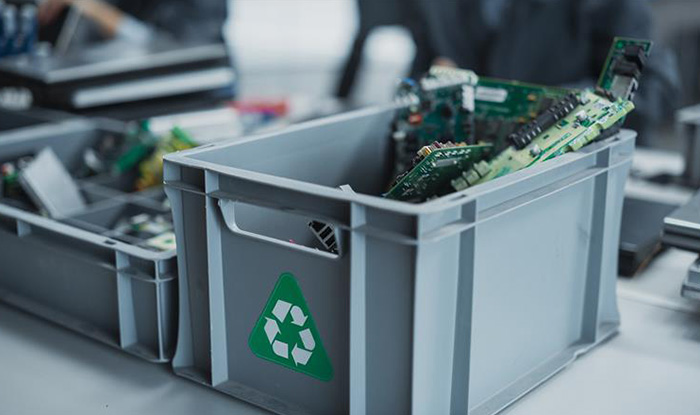
What is ITAD or IT Asset Disposition?
ITAD is the secure and responsible handling of end-of-life technology, including data wiping, hardware refurbishment, recycling, resale, donation, and certified destruction.
Companies today produce huge amounts of electronic waste. Devices that once lasted 8 to 10 years are now replaced every 3 to 4 years due to evolving security requirements, performance needs, and remote-work models.
It’s also important to ensure that the data contained is secure and does not lead to any issues for companies later on.

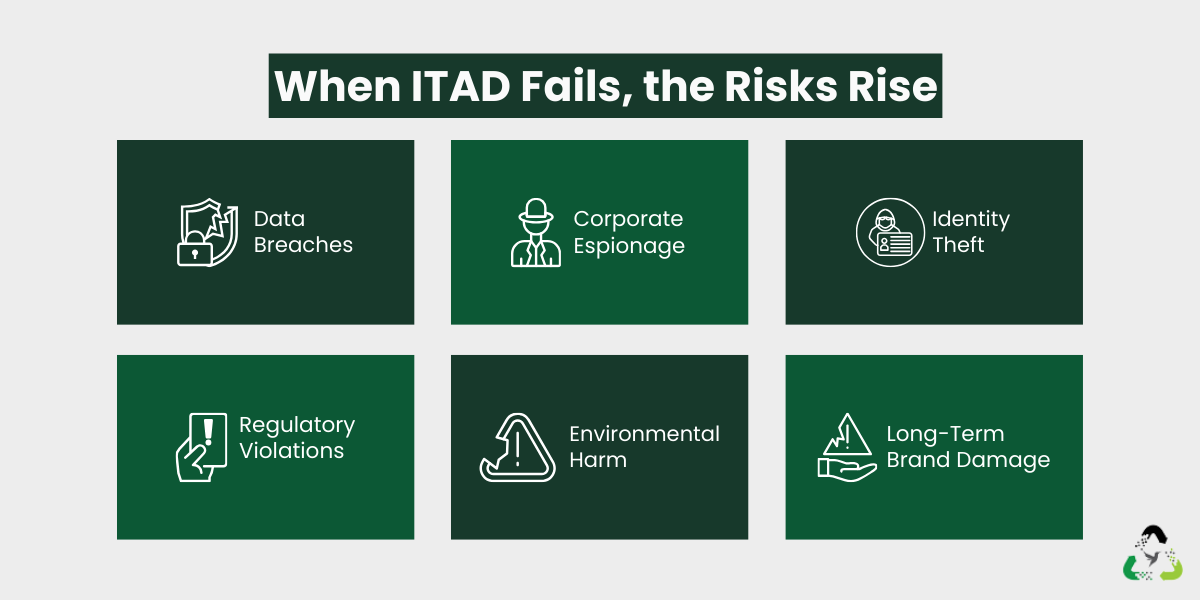
Without a certified ITAD partner, end-of-life devices can quickly turn into serious liabilities. Any mishandling can lead to:
- Data breaches
- Corporate espionage,
- Identity theft
- Regulatory violations
- Environmental contamination
- Long-term brand damage.
A certified ITAD provider eliminates these risks by following strict, audited standards for data security, proper recycling, and regulatory compliance.
Why Consider Certified ITAD for your Business
Certified ITAD covers three core functions that work together to make sure that every retired device is wiped, tracked, processed, and recycled properly.
These include:
- Secure data destruction
- Responsible recycling
- Value recovery/remarketing
These prevent your organization from being exposed to security, environmental, or regulatory risks.
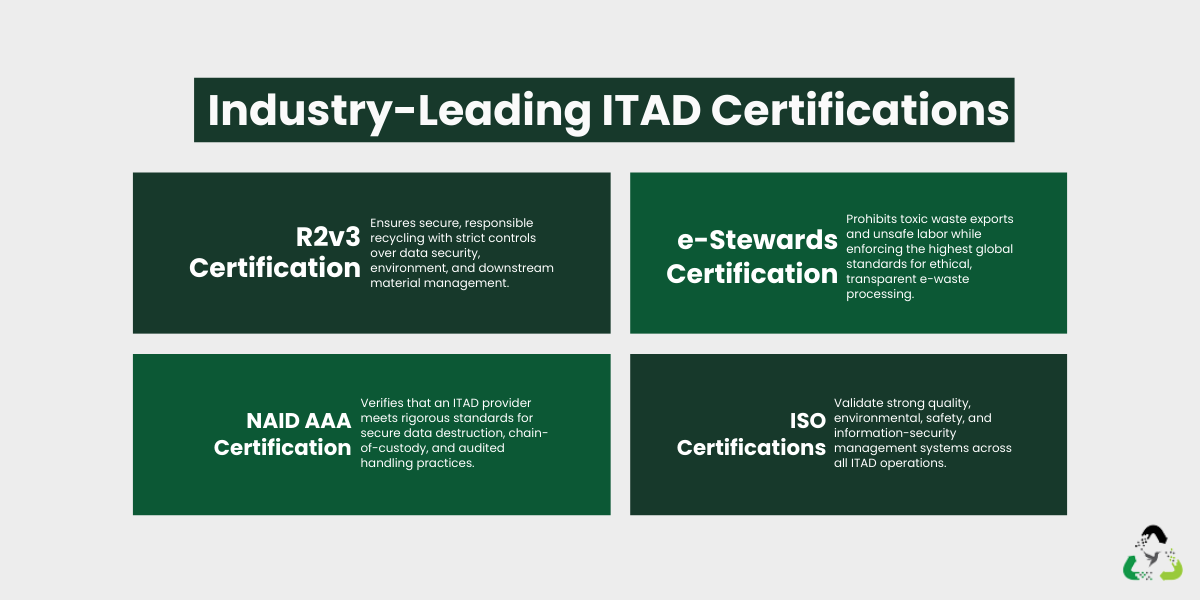
A certified partner follows globally recognized standards, such as R2v3, e-Stewards, NAID AAA, and ISO 9001/14001/45001. Each of which implements strict requirements for handling e-waste, eliminating data risks, and verifying environmental responsibility. These certifications are also in compliance with modern sustainability frameworks and ESG performance.
Many unregulated or ‘lowest bidding’ operators cut corners. They export e-waste illegally, burn plastics and wiring for raw materials, dump toxic components in landfills, or send waste to unprotected communities overseas. Certified ITAD partners exist specifically to prevent those outcomes.
Core Certifications of ITAD Service Providers
They show accountability, environmental responsibility, and implementation of strict security practices.
Here are the certifications you need to look for when choosing an ITAD partner.
-
R2v3 Certification
This is the latest and most secure version of the Responsible Recycling Standard. A partner without R2v3 is not equipped to guarantee proper e-waste handling. It mostly covers these aspects:
- Environmental controls
- Data security
- Worker safety
- Downstream material tracking
- Responsible reuse processes
-
e-Stewards Certification
Enterprise clients and global organizations do prefer e-Stewards vendors for high-risk assets. This certification can be considered a bit stricter than R2 and includes:
- Zero toxic waste exports
- No prison labor
- Transparent downstream vendor audits
- Very high sustainability standards
-
NAID AAA Certification
It’s a certification that is essential for any device containing sensitive data. From i-SIGMA, NAID AAA covers:
- Data wiping
- Media destruction
- Chain-of-custody
- Secure handling and storage
- Unannounced audits
-
ISO Certifications
All of these help maintain stable processes and consistent service levels. A reputable ITAD partner should hold the following:
- ISO 9001: Quality management
- ISO 14001: Environmental management
- ISO 45001: Worker safety
- ISO 27001 (optional but ideal): Information security
ITAD Certifications Comparison
| Certification | Main Focus | Key Requirements | Why It Matters | Best For |
| R2v3 | Responsible electronics recycling and data security | Downstream accountability, data validation and sanitization, environmental controls | Helps make sure devices are recycled ethically and securely | Mid to large businesses, multi-location companies |
| e-Stewards | Environmentally safe recycling | No export to developing nations, no burning of waste, no prison labor, strict chain-of-custody | Strongest environmental safeguards, zero toxic export | Businesses with ESG priorities, government organizations |
| NAID AAA | Data destruction | Data shredding and wiping, extensive audits, secure custody | Prevents data breaches and incorporates many regulations | Healthcare, finance, government, legal companies |
| ISO 9001 | Quality management | Standardized processes, complete documentation, improved processes | Allows for consistent service across all locations | Businesses requiring predictable processes that are mostly repeated |
| ISO 14001 | Environmental management | Waste reduction, pollution control, sustainable protocols | Prioritizes eco-friendly operations and compliance | Organizations focused on sustainability practices |
| ISO 45001 | Occupational safety | Disaster management, worker protection, compliance audits | Reduces risk of injury during recycling or dismantling | ITAD facilities, recyclers, businesses in the logistics industry |
How Proper ITAD Supports Sustainable Practices
By eliminating unsafe disposal methods such as burning, dumping, or exporting to developing nations, certified ITAD directly supports global climate action and contributes to a functioning circular economy. Let’s take a look at how the system works.
-
E-waste Disposal
A certified ITAD service makes sure that all e-waste and hazardous materials are processed through safe, approved methods. These include:
- Mechanical shredding
- Controlled smelting
- Precision metal recovery
With secure e-waste disposal, it becomes a lot easier to reduce and ultimately remove environmental toxicity.
-
Toxins and Chemicals
Most electronic waste contains lead, mercury, cadmium, flame retardants, lithium, and hundreds of hazardous compounds. According to a report, only 22.3% of that e-waste was formally collected and recycled in the right way from 2022 to 2024. When devices are left in landfills or informal dumps, these substances slowly leach into soil and groundwater, contaminating ecosystems and entering the food chain.
These risks are greatly reduced or removed completely through controlled recycling and safe dismantling.
-
Waste Burning
Burning electronics also releases toxic fumes that affect surrounding communities for generations. Incineration is one of the most harmful ways to dispose of electronics, as it releases these elements:
- Dioxins and furans, among the most toxic chemicals known
- Volatile organic compounds (VOCs)
- Greenhouse gases, greatly accelerating climate change
- Heavy metals, including lead and cadmium, that contaminate soil and air
Proper ITAD includes this under regulated hazardous-waste disposal scenarios. Companies can always check in their initial research and ask the teams as well. Reports and certifications are also provided to stakeholders for compliance with state policies.
-
Eliminates Greenwashing
It refers to recyclers and ‘e-waste haulers’ who offer seemingly eco-friendly solutions but may work with unethical or outright illegal practices. A certified ITAD partner maintains full transparency across each step that involves:
- Documented chain-of-custody
- Downstream vendor audits
- Compliance with R2v3, e-Stewards, and ISO standards.
This way, you can have peace of mind about recycling or disposal. And there is no possibility of your e-waste ending up in landfills or being exported to different countries.
Here are some factors to keep in mind with ‘greenwashing’ as it exposes businesses to liability, data breaches, and PR disasters.
- Devices may be shipped overseas to countries with lax environmental laws
- ‘Recycling centers’ may simply shred plastics and dump the rest
- Some operators burn plastics and cables to quickly extract copper
- Certifications, data destruction claims, or ESG promises can be completely false
-
Implements Climate Action
Proper ITAD with a dedicated service helps contribute to meaningful climate action and sustainability at multiple levels.
- Reduces Landfill Waste
Certified providers divert hundreds of pounds of toxic components from landfills annually. Lithium, cobalt, lead, and rare earth metals are recovered safely, minimizing environmental harm and preserving natural resources.
Case Study
A national insurance provider managed 9 regional offices and frequently disposed of old desktops, printers, and networking gear during system upgrades.
Challenge
Internal audits revealed that over 20,000 lbs of outdated electronics were either sitting in storage rooms or being taken to municipal landfills. This proved to be a major risk to environmental contamination (lithium, lead, mercury) and was leading to regulatory penalties.
Solution
The company onboarded an R2v3-certified ITAD partner that conducted full facility cleanouts and extracted batteries as well as hazardous components. They also provided landfill-diversion reports for ESG that the business could add for credibility.
- Supports Circular Reuse Models
With refurbishment and remarketing, the lifespan of several devices such as laptops and smartphones, can be extended to many years. Research from the Fraunhofer Institute for Environmental, Safety and Energy Technology UMSICHT says that reusing electronics can reduce the emission of greenhouse gases by 37 percent.
Case Study
One of the major telecom providers refreshed or upgraded 8,000+ workstations and thousands of devices like routers and modems annually.
Challenge
Most retired equipment still had several years of functional life remaining, but the company kept recycling all assets very quickly. This led to their problem of high emissions and a significant carbon footprint.
Solution
Working with a certified ITAD service helped them implement a reuse-first program by testing, wiping, and refurbishing viable devices. The company was able to prepare them for resale to SMBs and secondary markets too. Once, a supply carbon-impact comparison highlighted comparisons of reuse vs. new manufacturing, it became a lot simpler to direct part of the refurbished equipment to digital inclusion programs.
- Lowers Corporate Carbon Footprint
Refurbishing or reusing hardware helps reduce carbon footprint of companies to the lowest possible value. It has been reported that manufacturing a new laptop leads to an emission of 300 kg of CO₂e. When businesses implement ITAD, they can redirect working assets to employees, nonprofits, or secondary markets and cut emissions greatly.
Case Study
For a global consulting company that supported 6,500 employees across North America, Europe, and Asia, refreshing laptops was a key policy.
Challenge
Sustainability goals required reductions in Scope 3 emissions, and IT leadership needed a reliable way to measure and eliminate these from device replacement.
Solution
The firm prioritized refurbishment over recycling with proper ITAD and created carbon measuring models for device lifecycle emissions. They handed over refurbished laptops to new hires and junior analysts and donated any leftovers.
- Meet ESG Requirements
ITAD services help businesses integrate ESG policies quite smoothly as they are certified in every aspect of environmental, social and governance protocols. These frameworks reward businesses that have managed to:
- Reduce Scope 3 emissions
- Implement responsible waste management
- Maintain ethical supply chain practices
Case Study
When a publicly traded retail chain with 500+ locations was preparing for ESG reporting to their shareholders, they needed solid environmental data associated with electronics disposal.
Challenge
The company’s previous recycler provided no chain-of-custody documentation, no emissions metrics, and no downstream transparency. This made accurate ESG disclosure impossible and exposed the business to governance risk.
Solution
Their new certified ITAD partner implemented a system for ESg reporting and provided Scope 3 emissions calculations. Detailed summaries for auditors on e-waste disposal were provided to avoid policy violations.
- Strengthen Community and Global Impact
Businesses can play an active role in community sustainability by setting up centers for recycling, creating awareness, and managing seasonal waste surges. Secure e-waste disposal makes this a lot easier as pickups can be scheduled, high-volume returns are handled, and clear guidelines are specified beforehand to keep electronics out of landfills.
Case Study
A financial services company with 12 offices wanted a visible and long-term solution to contribute to local sustainability initiatives.
Challenge
Old hardware from annual refresh cycles was piling up, and the company had no structured program for donating equipment or engaging communities. There was very little going on to support community drives.
Solution
The company worked with a certified ITAD provider to refurbish usable equipment for donation and also partnered with community centers and schools. This helped them support e-waste drives, especially during the high-waste holiday season, and recycle unusable assets responsibly with full documentation.
-
Data Security and Compliance for ITAD
Nothing is more important than securing sensitive data. The following factors for data security and compliance need to be considered by every organization when evaluating an ITAD partner.
-
Remove Risks of Improper Data Disposal
When devices are discarded without secure processing, they can expose organizations to severe consequences like breaches, identity theft, and IP loss. These risks do not have to be a concern with a certified ITAD provider.
- Prevention of Data Leaks
Retired devices store credentials, emails, customer data, or access tokens. With verified NIST 800-88 wiping, data leaks are prevented as there is no recoverable data.
- No Identity theft
Employee records or customer details can be extracted from improperly erased drives, leading to identity fraud and liability. An ITAD partner applies multi-pass wiping and shredding to make sure all personal data is destroyed.
- Intellectual property loss
Source code, product roadmaps, R&D data, and proprietary algorithms stored on corporate devices can end up in the wrong hands. This is prevented with secure handling and controlled access.
- Regulatory penalties
Businesses subject to GDPR, HIPAA, PCI-DSS, FERPA, SOX, GLBA, and state privacy laws face hefty fines reaching millions of dollars if a discarded device leaks regulated data. With certified ITAD services, they get full chain-of-custody and destruction certificates to prove compliance for every asset.
-
Secure Data Destruction Protocols
Providers need to follow documented and strict destruction standards to make sure data cannot be reconstructed. The top protocols include:
- NIST 800-88 Rev. 1 Wiping
A destruction method run by a software that overwrites data on drives using certain patterns. It verifies that data can never be retrieved and provides proof-of-erasure reports.
- Degaussing
Used for magnetic media like HDDs and tapes, this method disrupts the magnetic field so that data becomes unreadable. It’s effective but also leads to the device becoming totally unusable.
- Physical shredding
Drives are shredded into small particles and destroyed. This is required for classified or highly sensitive data and is sometimes used after degaussing.
When it comes to data destruction, even laptop donation guidelines highlight that all donated hardware must go through a certified process since charitable redistribution still carries liability.
-
Chain of Custody Requirements
A secure chain of custody is what separates certified ITAD partners from traditional recyclers. It allows assets to be accounted for from pickup to final disposition.
- Serialized tracking
Every asset is assigned a unique ID, scanned, and logged throughout the entire process. This prevents losses and helps during audits.
- Tamper-proof transport
Pickup vehicles are locked, sealed and GPS-tracked. They may also be equipped with surveillance during transport of devices. Staff handling devices undergo background checks and security training too.
- Pickup documentation
ITAD teams provide manifests, transfer-of-custody forms, and packing lists when collecting the electronics. These documents show who is responsible for the devices at each stage.
-
Compliance Standards
Other than the certifications, it is also important to make sure that a service provider complies with the criteria set for data security.
- SOC 2 Type II Compliance
This evaluates how the ITAD provider manages security, availability, confidentiality, and processing integrity over time. It confirms that internal processes and controls are consistently followed and not just documented.
How to Implement an ITAD Program across Organizations
To work effectively across a business, an ITAD program must be systematic, documented, and easy for every department to follow.
Step 1: Conduct a Device Audit
A complete audit establishes what assets exist and where they are located. With a thorough audit, it is easier to estimate ITAD volumes and identify high-risk devices for data protection.
These are the key elements that businesses need to consider when running a device audit for ITAD:
- Map every asset
Desktops, laptops, servers, networking devices, mobile phones, POS systems, storage devices and legacy equipment connected to the network.
- Capture asset details
Serial numbers, asset tags, purchase dates, warranty status, installed OS, storage type, and any encryption applied.
- Location-based tracking
Identify which devices are in headquarters, remote branches, data centers, warehouses, and work-from-home users.
- Usage/condition assessment
Separate which devices are active, inactive, damaged, obsolete, or approaching refresh.
- Risk classification
Group devices by data sensitivity, like those being used by finance systems, healthcare equipment, R&D hardware, or devices storing PII.
- Forecasting disposal cycles
Use refresh intervals (3–5 years for laptops, 5–7 for servers) to forecast ITAD scheduling and budget for future cycles.
Step 2: Create an Internal ITAD SOP
An internal process allows everyone to follow the same rules. The SOP should define how devices are stored before pickup and when data wiping should occur. It also includes packaging requirements and forms completed. All processes need to clearly outline approval workflows as well.
Here’s how you can set up an effective SOP internally for ITAD.
-
Asset Retirement Criteria
Define when a device qualifies for disposal, including details like performance decline, hardware failures, refresh cycles, warranty expiration, or security vulnerabilities.
-
Pre-Disposal Handling
Explain how devices should be prepared before handoff. Highlight if it needs data wiping internally, removing batteries or sensitive modules and sanitizing assets physically for safety.
-
Storage Protocols
Set rules for where devices should be stored when being prepared for disposal. They need to be kept in access-controlled rooms, locked bins or storage cages and have labeling as well as environmental requirements.
-
Documentation Requirements
In your SOP, clearly mention the asset transfer forms or decommissioning checklists, chain-of-custody logs, approval workflows and additional notifications for when equipment is ready for pickup.
-
Handoff Procedures
Explain who is allowed to coordinate with the ITAD provider, how the devices are counted and sealed, and how shipping or pickup confirmation is handled.
Step 3: Train Employees
Employee training prevents accidental data exposure and asset loss. Training should cover these factors:
- How to identify devices ready for retirement
- Which items need secure handling
- How to label assets
- Which devices must never be thrown away or donated without IT approval
Teams in IT, HR, finance, and administration should particularly understand the risks of improper disposal.
Responsible employees need to identify devices that are reaching end-of-life, no longer in active use, or due for replacement. Devices should never be:
- Thrown into regular office trash
- Taken home or donated independently
- Resold online,
- Wiped using consumer-grade software
Every employee should know the correct, secure handoff process. Clear communication, visual guides, and reminders can help them stay up to date. Finally, ITAD programs must work with remote and hybrid employees. They require:
- Extensive support
- Pre-paid return shipping labels
- Guidance on secure packaging,
- clear timelines for returning devices during refresh cycles.
Remote staff can make it a bit challenging to track assets so providing them with a simple, secure return process is essential.
Step 4: Set Up Secure Collection Points
Secure drop-off or storage locations reduce chain-of-custody risk. These can include:
- Lockable cages
- Dedicated IT storage rooms
- RFID-controlled closets
- Secure bins placed in large offices or remote branches
- Rooms with restricted badge access
- CCTV monitoring
- Sealed, tamper-proof containers
Collection points should prevent unauthorized access, include clear labeling, and be monitored by the IT team or facility managers.
Step 5: Establish Regular Pickups
Most organizations operate on quarterly, biannual, or annual ITAD pickups, depending on device volume. Consistent pickup schedules help businesses make sure that devices don’t just stay within insecure areas.
Here’s what you should keep in mind.
On-demand pickups for sensitive hardware
Devices with sensitive data may require immediate pickup after decommissioning.
Volume tracking
Keep a record of how many devices each location disposes of annually to refine scheduling.
Packaging and logistics
Prepare pallets, secure boxes, and bubble wrap for safe transport.
Third-party logistics coordination
Make sure the ITAD provider uses certified transporters with GPS tracking and sealed vehicles.
In the long run, scheduled pickups also streamline budgeting, storage planning, and ESG reporting cycles.
Step 6: Monitor Reports
Every batch of devices should generate documentation that proves compliance. This includes:
- Certificate of Data Destruction (CoD): Shows how each device had their data removed like wiping, degaussing and shredding.
- Certificate of Recycling (CoR): Verifies that devices were recycled responsibly using R2v3/e-Stewards standards.
- Serialized Asset Report: Lists each device, its serial number, processing result, and final disposition.
- Chain-of-Custody Log: Documents who handled the equipment at every step of transport and processing.
- ESG Impact Report: Has all the details such as carbon savings, landfill diversion metric and recovery values.
Regularly reviewing these documents helps the ITAD provider follow certified processes and gives leadership the visibility required for audits and sustainability reporting.
Step 7: Optimize Over Time
A strong ITAD program needs to expands as your organization grows. Thes are some key elements for optimization:
- Pickup data
- Data destruction reports
- Device condition trends
This will help you refine collection point locations, adjust schedules, and streamline internal SOPs. Optimization also includes integrating ITAD into:
- Planning refresh cycles
- Procurement decisions
- Data-protection strategies
- Internal workflows
By connecting lifecycle data with purchasing decisions, companies can avoid over-buying and shift toward more sustainable hardware practices. As devices are retired, tracking remarketing returns becomes very important.
Your ITAD standard operating procedures should be updated at least once a year to work with new regulations, certification updates, organizational changes, or new device types.
| Step | Focus | What It Solves |
| 1. Audit | Know what assets you own | Prevents asset loss & compliance gaps |
| 2. SOP | Standard rules for all locations | Eliminates inconsistency |
| 3. Training | Educated employees | Reduces data risks |
| 4. Collection Points | Secure storage | Prevents theft/misuse |
| 5. Pickups | Predictable schedules | Lowers costs and chaos |
| 6. Reporting | Documentation trail | Regulatory compliance |
| 7. Optimization | Ongoing refinement | Long-term efficiency and ROI |
The Bottom Line: Select the Right ITAD Partner
Picking the right ITAD service protects your business on multiple fronts, from data security and regulatory compliance to technology lifecycle efficiency. A certified one delivers value with secure data destruction, transparent chain-of-custody, responsible recycling, and remarketing strategies that actually return revenue back into your IT budget.
With a structured approach and a certified partner, ITAD becomes a strategic asset for your business. So choose an ITAD partner who aligns with your operational needs, compliance requirements, and long-term sustainability goals.
FAQs
1. What is a certified ITAD provider, and how is it important?
A certified ITAD provider follows every standard set for data destruction, environmental responsibility, and recycling e-waste. They have certifications like R2v3, e-Stewards, and NAID AAA to handle and dispose of electronics. It’s an important service that helps keep your business safe from data breaches, regulatory penalties, and environmental liabilities.
2. How does ITAD support data security and compliance?
They use methods like NIST 800-88 wiping, degaussing, and physical shredding to get rid of sensitive data. With secure transport, documentation, and regular audits, these processes reduce the risk of identity theft and intellectual property loss. They also avoid violations of GDPR, HIPAA, or state privacy laws.
3. How can ITAD contribute to ESG goals?
ITAD promotes responsible recycling, refurbishment, and reuse of electronic assets. By diverting e-waste from landfills, reducing carbon emissions, and supporting circular economy initiatives, organizations can lower their environmental footprint, meet ESG criteria, and participate in community recycling programs.
4. What are the key steps to implement a company-wide ITAD program?
Successful ITAD implementation includes auditing devices, creating internal SOPs, training employees, setting up secure collection points, scheduling regular pickups, and monitoring destruction reports. Ongoing optimization—like improving workflows and expanding device categories—ensures maximum security, efficiency, and asset value recovery.
5. How do I choose the right ITAD partner for my organization?
Look for a provider with recognized certifications, robust data destruction processes, transparent reporting, multi-location support, and environmental accountability. The right partner should align with your IT workflows, compliance needs, and sustainability goals, acting as a long-term strategic ally rather than just a disposal vendor.


Leave a Reply