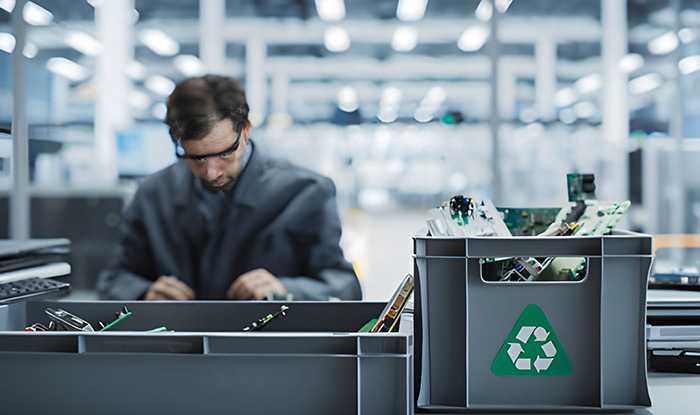
For years, manufacturing has followed a predictable cycle: make something, use it, toss it, move on. It worked for a while, until the waste started piling up. Today, the growing mounds of discarded electronics are growing every year, reflecting our buy-replace-repeat lifestyle, which has its limits. This is where the idea of designing for a second life steps in.
The Concept of Designing for a Second Life
Designing for a second life means creating products that don’t simply stop being useful once their first purpose is over. It is a shift in thinking, one where every stage of a product’s journey, from the materials used to how it’s taken apart, is planned with longevity in mind. Instead of designing for short-term use, brands are now looking at how each component can be reused, repaired, or transformed into something entirely new.
This approach moves beyond the idea of recycling as we know it. It encourages designers to build products that retain their value longer, reduce waste from the start, and remain useful long after their original purpose is complete.
How It Differs from Traditional Recycling
Traditional recycling usually breaks materials down to their basic form, and in the process, some quality is often lost. Downcycling goes even further by turning old components into lower-value products, limiting their usefulness in the long run.
Designing for a second life takes a different route. Instead of stripping materials down, it focuses on keeping components intact and valuable. Products are built to be repaired, upgraded, and taken apart easily, so individual parts can continue their journey without being discarded. It’s a more thoughtful, long-term approach that preserves both material quality and purpose.
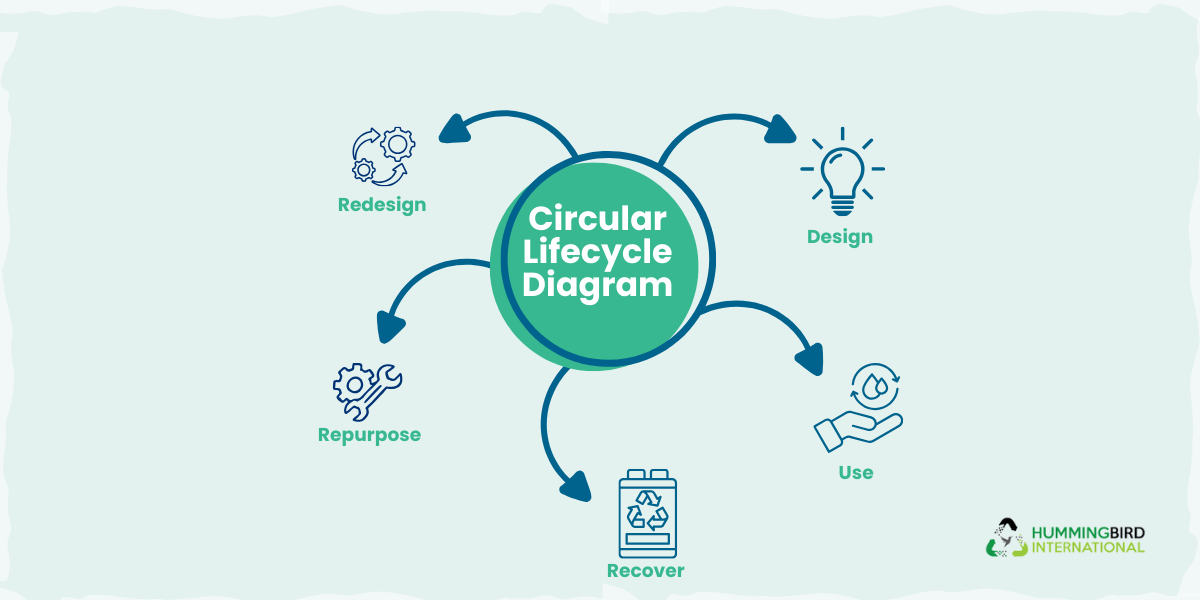
A Full Lifecycle Approach
Designing for a second life means looking at a product from every single angle, not just how it is made or used, but what happens afterward. Instead of following a simple “make, use, toss” pattern, this approach creates a loop that keeps materials useful for as long as possible.
Material sourcing
Choosing recycled, responsibly mined, or renewable materials from the very beginning so the product has a lower environmental impact from the start.
Design and manufacturing
Building products with modular parts and simple structures that make repairs, upgrades, and disassembly much easier.
Post-use recovery
Setting up systems for take-back programs, refurbishment, or repurposing before traditional recycling is considered.
Brands Leading the Way
Some companies aren’t just talking about sustainability, they’re going the extra mile and building it into their products and operations.
Apple has significantly increased the use of recycled materials in its latest devices. The new iPhone Air now includes around 35% recycled content by weight and uses 80% recycled titanium in key parts.
Samsung is advancing circular manufacturing by incorporating recycled materials into its Galaxy S25 series. The phones use recovered gold, copper, cobalt, and aluminum, and even reuse plastics and metals from older smartphones and manufacturing scrap.
Dell continues to embed circular principles across its products and packaging. In 2024, the company used more than 95 million pounds of recycled or renewable materials, including recycled metals and bio-based plastics.
Benefits of Designing for a Second Life
Designing electronics for a second life goes far beyond simply making devices last longer. It requires manufacturers to rethink how products are built, used, repaired, and eventually reintroduced into the system. When devices are designed with reuse and adaptability in mind, they help address one of the fastest-growing environmental challenges today: electronic waste.

Image Source: iStock/Thx4Stock
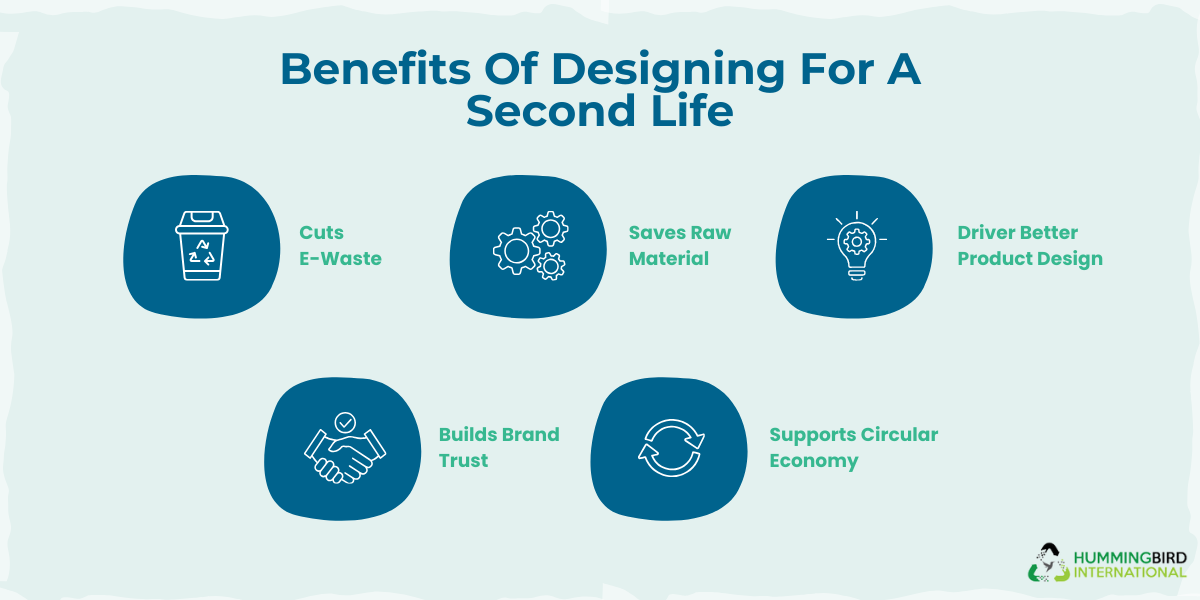
1. Cuts Down on E-Waste Accumulation
The world generates over 62 million tonnes of e-waste every year, yet only 22% of it is recycled responsibly (Global E-waste Monitor, 2022). Designing products for a second life helps slow this cycle. Instead of being dumped in landfills, valuable components like batteries, chips, and screens can be reused, refurbished, or remanufactured into new systems, keeping them in circulation for longer.
2. Reduces Demand for New Raw Materials
Electronic devices rely on rare and finite resources such as cobalt, gold, and lithium. Mining these materials is not only resource-intensive but also environmentally damaging. By using reclaimed materials or modular components, manufacturers can significantly reduce the need for new extraction, easing pressure on natural ecosystems.
3. Creates a Path for Smarter Product Design
When a product’s second life is considered from the very beginning, design choices become more thoughtful. Devices are built with modular parts, replaceable batteries, and clearly labeled materials that make repairs and recovery easier. This approach reduces waste and also drives innovation by producing technology that lasts longer, performs better, and is simpler to recycle when its first life ends.
4. Boosts Brand Trust and Market Appeal
Sustainability is no longer a “nice to have,” especially for younger consumers. A Deloitte report shows that 64% of Gen Z buyers prefer brands that clearly demonstrate environmental responsibility. Companies that design with circularity in mind, like Apple with its “Daisy” recycling robot that recovers gold and rare earth elements, strengthen consumer trust, build loyalty, and enhance long-term brand value.
5. Supports a Circular Tech Economy
Products designed for easy disassembly and reuse naturally support a circular economy, where waste becomes a resource rather than an endpoint. This model reduces environmental harm while opening doors to secondary markets, repair services, and local refurbishment businesses. The result is a system that conserves resources, creates jobs, and keeps materials moving instead of piling up.
The Role of E-Waste in Modern Manufacturing
While e-waste has become the world’s fastest-growing waste stream, it has also become one of the most promising sources of raw materials for modern industries. As manufacturers face rising material costs and sustainability pressures, the focus has shifted from mining the earth to mining what we’ve already used. Today, e-waste is a design and innovation opportunity that reshapes how products are made.
A Shift from Disposal to Design Thinking
Traditional manufacturing has long followed a linear path: extract, produce, use, and discard. E-waste is changing that model by showing that even obsolete electronics still have value.
Modern manufacturing is beginning to view discarded electronics as design inputs rather than waste outputs. Design teams are now thinking about how metals, plastics, and components can be extracted, repaired, or repurposed before a product is even made.
This approach is redefining assembly methods, material choices, and product end-of-life strategies. Manufacturing is evolving to design for reuse rather than for one-time use.
Building Supply Chains Around Reclaimed Materials
Supply chains are being restructured to accommodate recycled e-waste components. Instead of relying solely on virgin raw materials, companies are forming partnerships with e-waste processors and recovery facilities to secure a steady stream of usable resources.
These partnerships help ensure a steady supply of usable resources. They are not only about reducing costs but also about creating resilience. When global shortages of metals such as lithium or copper affect production, reclaimed materials from e-waste can fill the gap. By incorporating e-waste into their sourcing strategies, manufacturers gain a competitive advantage that is both economically and environmentally sustainable.
Innovation in Material Recovery Technologies
Technological advancements are making e-waste a more practical input for manufacturing than ever before. Modern techniques such as hydrometallurgical processing and bioleaching can extract precious metals and rare elements with minimal environmental impact.
Even small components like circuit boards and microchips are being processed more efficiently, allowing manufacturers to recover usable materials without significant loss of quality. This new wave of clean-tech recovery makes it possible for e-waste to re-enter production lines as high-quality material, not as a compromised substitute.
Integrating Circular Design into Production Models
Modern manufacturing focuses on creating products that are built to last. Recovering e-waste supports a broader circular design approach that emphasizes durability, reparability, and modularity. Products designed with modular parts, standardized components, and easily separable materials have longer lifespans and are simpler to recycle or repurpose at the end of their life. This design strategy reduces waste from the outset and establishes a continuous cycle in which materials are reused within production systems.
Challenges and Solutions in Scaling Repurposed Material Use
Turning e-waste into raw material offers a promising circular solution, but implementing it on a large scale is not always simple. Expanding the use of repurposed materials comes with challenges, including inconsistent supply, variable quality, and public perception issues.
Scaling the use of repurposed materials comes with its own hurdles, from inconsistent supply to perception barriers. But as technology and policy evolve, the path forward is becoming clearer.
However, as technology advances and supportive policies take hold, these obstacles are gradually being addressed, making the path toward scalable circular manufacturing clearer.
Image Source: iStock/Drazen_
Challenge: Inconsistent Supply and Material Quality
One of the biggest challenges in using repurposed materials is the unpredictability of supply. Unlike virgin resources that can be ordered in bulk, recycled materials, especially from e-waste, depend on what’s collected, recovered, and refined at any given time. This inconsistency can make it difficult for manufacturers to maintain uniform production standards. Quality also varies: metals and plastics reclaimed from electronics may contain impurities or degrade through multiple processing cycles. Manufacturers must invest in advanced purification and testing systems to ensure that these recovered materials meet safety and performance requirements for industrial use.
Challenge: High Cost of System Redesign
Switching from traditional materials to reclaimed ones is not a simple substitution. It often requires rethinking entire production systems, as machines, molds, and manufacturing lines are typically designed for specific material grades and behaviors.
It can be expensive and time-consuming to reconfigure them for new inputs, even if those inputs are just recycled versions of the same materials. Smaller manufacturers, in particular, may struggle to justify the upfront costs, even if the long-term savings and sustainability benefits are clear. That’s why scalable design strategies and government incentives are critical to make circular production viable on a broader scale.
Challenge: The “Secondhand” Perception Problem
Another significant barrier is not logistical but perceptual. Many consumers still associate terms like “recycled” or “repurposed” with “used,” “cheap,” or “inferior.” This stigma influences how brands communicate their sustainability efforts and set product prices.
The truth is that modern repurposed materials can often outperform their virgin counterparts in strength, durability, and environmental impact. Many brands are helping shift this narrative by proving that circular products can also be sleek, high-performing, and desirable.
But widespread change requires consistent messaging across industries, from packaging and electronics to fashion and automotive. Now, let’s talk about how the industry is overcoming these barriers.
Solution: Technology as a Game-Changer
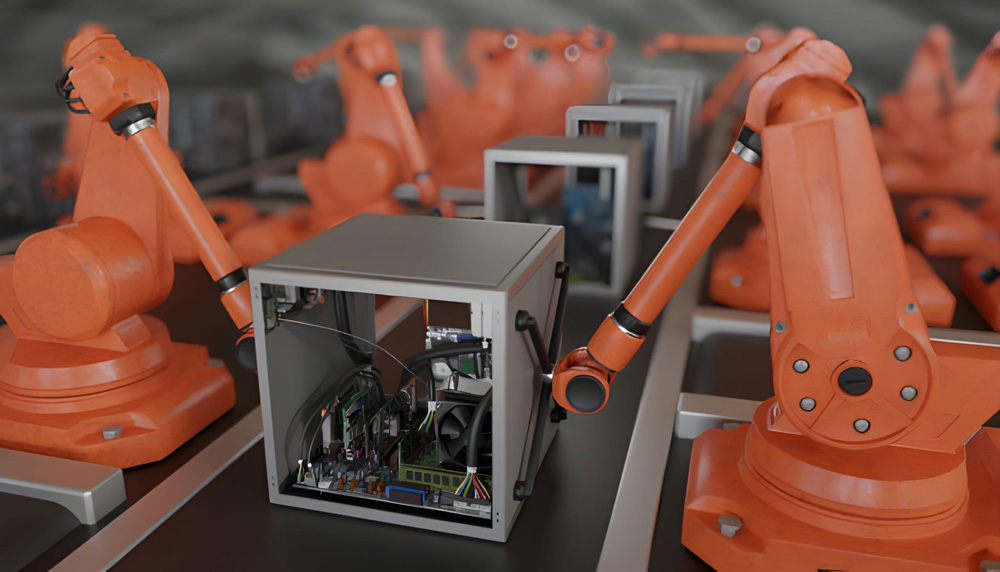
Image Source: iStock/vchal
Technology is rapidly closing many of the gaps in repurposed manufacturing. AI-powered sorting systems can now identify, classify, and separate e-waste materials with remarkable precision, significantly improving recovery rates.
Machine learning helps recyclers predict supply flows, optimize logistics, and maintain consistent material quality. Robotics and automation make disassembly safer and faster, while innovations in chemical recycling allow even complex electronic components to be converted into reusable feedstock. Together, these advancements make large-scale repurposing more practical, efficient, and profitable.
Solution: Policy Support and Industry Collaboration
Government policies are increasingly playing a crucial role in supporting the shift toward repurposed manufacturing. Programs such as Extended Producer Responsibility (EPR) hold manufacturers accountable for the end-of-life impact of their products and encourage them to design with reuse in mind.
At the same time, public–private partnerships and industry coalitions are building shared recycling infrastructure, making access to repurposed materials more reliable. The EU’s Circular Economy Action Plan and similar initiatives in Japan and Canada are already driving investment in recovery systems and sustainable design education.
Solution: Redefining Resource Value
The future of repurposed manufacturing isn’t about eliminating every challenge — it’s about redefining how we value resources. As design innovation, policy reform, and technology converge, the barriers become opportunities. Manufacturers that embrace circular design early won’t just gain sustainability credentials, they’ll build resilience, creative flexibility, and independence from volatile resource markets and set the tone for the next era of manufacturing.
Snapshot Of The Challenges And Solutions
| Challenge | Solution | Example |
| Inconsistent Supply & Material Quality | Use advanced testing and purification; partner with reliable e-waste processors | Dell integrates reclaimed metals and plastics into laptops with strict quality checks |
| High Cost of System Redesign | Implement scalable design strategies; leverage government incentives | Samsung gradually adjusts production lines to incorporate recycled materials in Galaxy phones |
| Secondhand Perception Problem | Educate consumers on performance and durability; highlight circular design | Apple’s “Daisy” robot recycles rare earth metals, showing a high-tech, high-quality circular design |
| Gaps in Material Recovery & Processing | Use AI sorting, robotics, automation, and chemical recycling for efficient recovery | Hummingbird International leverages AI and automated disassembly for electronics |
| Lack of Policy Support & Infrastructure | Participate in EPR programs, public-private partnerships, and circular economy initiatives | EU Circular Economy Action Plan drives investment in recycling infrastructure |
| Undervalued Resource Potential | Design products for reuse, repairability, and modularity to maximize lifecycle | Fairphone creates modular smartphones with swappable parts for long-term use. |
The Future: Circular Design as the New Standard
Imagine a future where every product, from your laptop to your battery, is created with its next chapter already planned. That’s what circular design stands for: designing with longevity, repairability, and reusability built in from the start. This shift transforms manufacturers from mere producers to stewards of their products’ full lifecycles.
Instead of discarding old devices, companies reclaim, refurbish, and reintegrate materials back into production, keeping valuable resources in circulation. The movement toward circular design isn’t only an environmental win. It’s a creative and economic one, too:
- Design innovation thrives when materials are given second lives, inspiring new aesthetics and smarter engineering.
- Resilient supply chains emerge as dependence on raw materials decreases.
- Brand trust and value grow as sustainability becomes central to a company’s identity.
Circular manufacturing is no longer a niche experiment; it’s the blueprint for the future. By treating e-waste as a strategic resource, industries are redefining what progress looks like in a world that designs for forever.
Summing Up
Designing for a second life is more than a sustainability buzzword. It represents a smarter, more innovative way to build the future. When manufacturers treat e-waste as a valuable resource instead of a burden, waste becomes an opportunity. Repurposed materials are no longer a compromise; they are reshaping what quality, creativity, and innovation mean in modern manufacturing. Brands that design with longevity in mind, from the first sketch to the product’s next life, are poised to lead the next industrial era. At Hummingbird International, we make that shift possible by giving old tech a new purpose. Through responsible laptop disposal and smart e-waste recovery, we are powering the circular manufacturing revolution.
FAQs
Are repurposed or recycled materials as reliable as new materials?
Yes. Modern recovery processes, modular designs, and advanced testing ensure that repurposed materials meet the same quality and performance standards as virgin materials.
What kinds of products are suitable for second-life design?
Electronics like laptops, smartphones, and batteries are great examples, but it can also apply to furniture, appliances, and other durable goods with modular or replaceable parts.
How do companies collect used products for second-life use?
Through take-back programs, trade-in schemes, and partnerships with e-waste recyclers like Hummingbird International. Some brands also encourage consumers to return old devices with incentives like discounts or loyalty points.
How long can a product last if designed for a second life?
Products designed for reuse, modularity, and repair can last multiple times longer than conventional devices, sometimes doubling or tripling their effective lifespan.


Leave a Reply