The solution for mitigating the risk is creating a ITAD workflow:
inventory → secure pickup → certified data destruction → verified recycling → audit-ready reporting.
Start with secure e-waste pickup or review IT asset recycling and ITAD services.
For both large and small businesses there may be an understanding of the risk, but no processes to mitigate it. Devices may get retired, they are left in storage with no inventory, there is no tracking of devices between multiple offices and if they are disposed off, they get handed to vendors who can’t prove what happened next.
The result is: lost assets, unverified recycling, and avoidable data risk.
This guide explains what responsible e-waste management looks like for businesses and how to make the right call for ITAD disposal, recycling, and reporting.
- What is E-Waste Management for businesses?
- Why businesses need to rethink e-waste management now
- How Improper E-Waste Disposal Impacts the Environment
- Recycle, Refuse, or Reuse: what businesses need to know
- What responsible e-waste recycling involves (business checklist)
- How businesses should set up a repeatable e-waste program
- How business decisions impact the e-waste system
- A practical framework: choose between reuse, recycle, or refuse (for businesses)
- Choose less, use longer, recycle right
- FAQs
What is E-Waste Management for businesses?
E-waste management is the process of retiring electronics in a way that’s secure, compliant, and verifiable. It is not “recycling”, It is a procedure where a documented path for each device is created from collection to disposition. The manner of the device disposal is dependent on the stored employee, customer, or corporate data.
A business-grade program includes:
- Inventory + categorization (what the asset is, where it is, who owns it)
- Secure pickup + chain-of-custody for transport via reverse logistics pickup
- Certified data destruction for storage-bearing assets via data destruction or hard drive disposal
- Verified recycling downstream backed by certifications
- Audit-ready documentation (reports + certificates) covered in the e-recycling FAQ
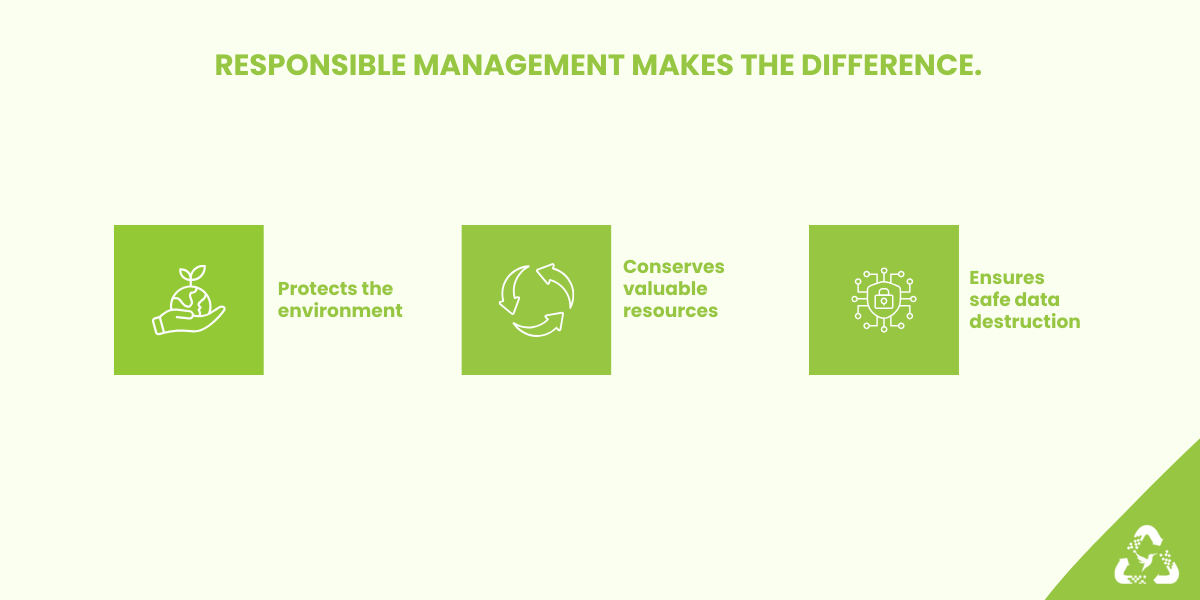
Once the short term risk is managed the long term environmental impact is reduced.
- Environmental protection: When e-waste is properly recycled, harmful chemicals from do not enter the soil and water
- Resource conservation: Mining demands are reduced when valuable materials are kept in circulation
- Lower data and compliance risk: A documented ITAD process or a simple e-waste recycling procedure ensures compliance of audits in regulated industries.
Businesses and organizations need to understand that e-waste management is not just a sustainability issue. It’s a security, compliance, and vendor accountability issue with an additional environmental and health impact.
Why businesses need to rethink e-waste management now
With a growing global world in technology, buyers, regulators, and internal security teams expect proof, of security not promises. In the enterprise and small business industries, ESG reporting, customer security reviews, and procurement due diligence are dependent on how retired electronics were handled (with documentation).
The outcomes for rethinking e-waste management are:
- Risk reduction (data, compliance, vendor accountability)
- Operational efficiency (repeatable pickups, fewer handoffs, less storage)
- Measurable reporting (certificates, chain-of-custody, ESG documentation)
How Improper E-Waste Disposal Impacts the Environment
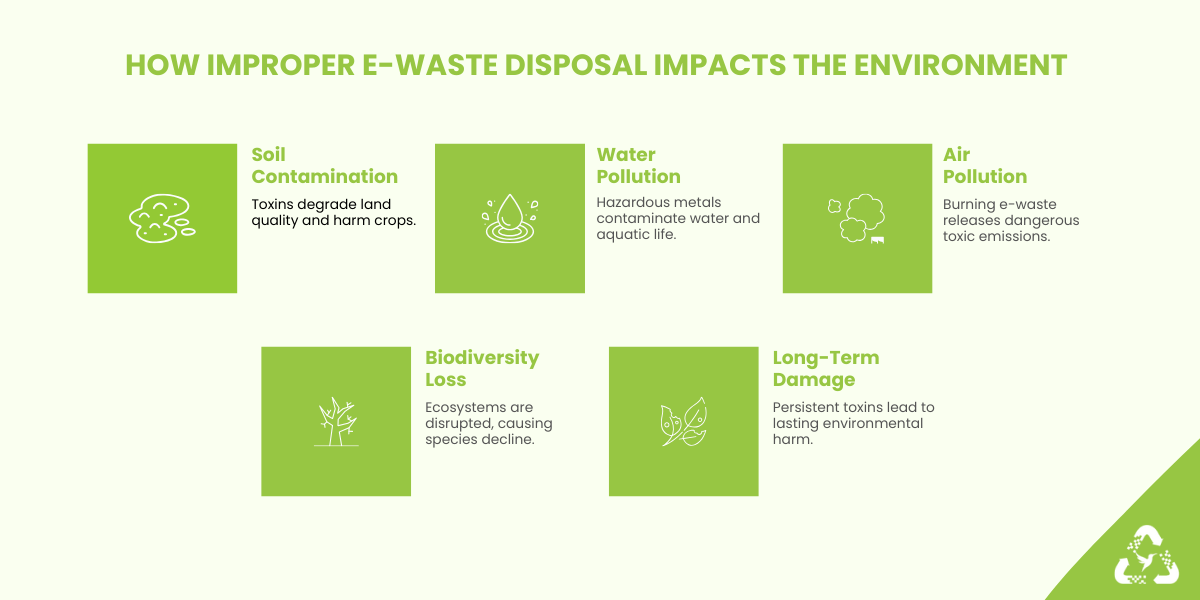
The environmental impact of Improper disposal has long-term consequences. Discarded electronics are usually dumped in landfills, burned, or processed through incorrect and uncertified recycling. Due to the materials in the devices a toxic mix of substances are released that are poisonous.
Soil Contamination and Land Degradation
When e-waste is not disposed of properly, harmful substances can enter surrounding soil, effecting the land quality for decades.
Impacts on soil include:
- Heavy metal deposits that prevent healthy plant growth
- Reduced agricultural productivity in nearby areas
- Long-lasting contamination that can persist for decades
- Release of toxins into crops, entering the food chain
Water Pollution and Ecosystem Damage
Acid leaching of circuit boards, can discharge untreated wastewater directly into nearby water systems.
- Contamination of drinking water sources
- Release of mercury, lead, and cadmium into fish and aquatic life
- Reproductive failure and population decline
- Long-term damage to freshwater and coastal ecosystems
Air Pollution and Toxic Emissions
Open burning of e-waste releases hazardous pollutants into the air.
- Release of dioxins and furans
- Fine particles that cause respiratory and cardiovascular disease
- Pollutants spreading beyond disposal sites
- Airborne toxins depositing back onto land and water
Biodiversity Disruption
- Loss of sensitive plant and aquatic species
- Disruption of food chains due to toxins
- Decline of species that support ecosystem balance
- Long-term habitat degradation near dumping and informal recycling sites
Long-Term Environmental Consequences
Many toxic components of e-waste do not break down naturally. Their effects accumulate over time.
- Permanent soil and water contamination
- Higher remediation costs for future generations
- Expansion of polluted zones as volumes rise
- Irreversible ecosystem damage in severely affected regions
Responsible e-waste recycling with a certified ITAD partner helps prevent these outcomes—and protects your organization with documented, auditable processes.
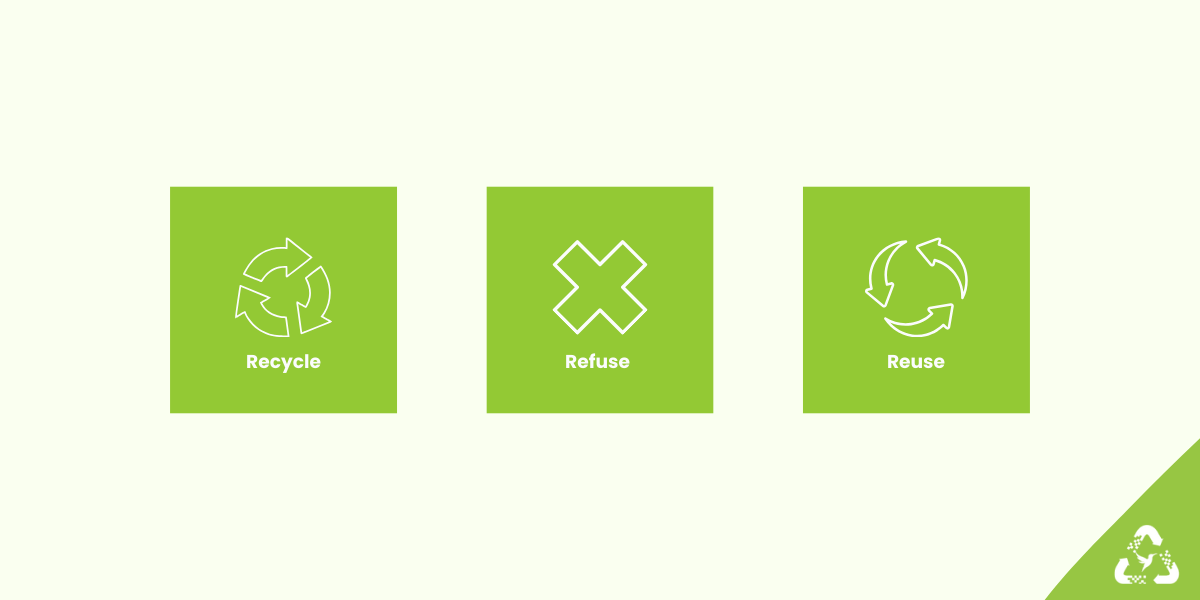
Recycle, Refuse, or Reuse: what businesses need to know
For businesses, the right choice od device disposal is usually based on data risk, condition, and documentation requirements.
-
Recycle (certified only)
Responsible e-waste recycling involves:
- Secure data destruction (wiping or physical shredding)
- Proper dismantling and material separation
- Safe handling of hazardous components
- Verified downstream processing with documentation
Businesses should prioritize certified processing + reporting, not just “haul-away.”
-
Refuse (reduce unnecessary replacement)
Refusing e-waste means reducing unnecessary replacements:
- Delaying upgrades when devices still meet requirements
- Avoiding low-quality, disposable electronics
- Choosing products designed for repair and longevity
- Resisting market trends to create replacement cycles
-
Reuse (redeploy, refurbish, resell—securely)
Reuse is the middle ground between refusal and recycling. It has the most benefit at enterprise level:
- Refurbishing extends product life
- Preserves embedded energy and materials
- Redeploying because it reduces demand for new manufacturing
- Reselling helps lower overall emissions and provides financial benefits
Pair reuse with data destruction and documented chain-of-custody.
What responsible e-waste recycling involves (business checklist)
| Recycling Element | What Responsible Recycling Requires | Why It Matters |
| Data destruction | Certified wiping (NIST 800-88) or physical shredding | Prevents data breaches, identity theft, and IP loss |
| Certified processors | R2v3 / e-Stewards–certified facilities | Ensures environmental and labor compliance |
| Downstream audits | Verified vendors for dismantling and material recovery | Prevents illegal dumping and unsafe recycling |
| Export controls | No shipment of non-functional devices to developing regions | Reduces downstream risk and reputational exposure |
| Documentation | Certificates of destruction + recycling reports | Supports audits, ESG reporting, and procurement |
How businesses should set up a repeatable e-waste program
- Inventory assets before they move (serial/asset tag + storage status)
- Standardize pickup across sites using reverse logistics pickup
- Build data destruction into the workflow using IT data destruction services
- Collect reporting that procurement will ask for (see e-recycling FAQ)
- For large IT projects, align disposal with data center decommissioning or IT asset disposition (ITAD)
How business decisions impact the e-waste system
1. Procurement standards change outcomes
When companies decide to buy devices that are refurbished, and set refresh policies, with processes of replacement that need vendor documentation, they take part in sustainable efforts to reduce waste and improve compliance at scale.
2. Standardized disposal protects security and brand risk
When processes are standardized and compliance certifications are required for device retirement and destruction, security and data risks are reduced.
3. ESG and audit reporting
A certified ITAD workflow produces the documentation needed for ESG claims, security reviews, and procurement validation.
A practical framework: choose between reuse, recycle, or refuse (for businesses)
1. Can the device be redeployed internally?
- Is it still functional and secure for the use case?
- Can it be reassigned after verified sanitization?
2. Can it be refurbished or resold safely?
- Only after documented wiping or destruction
- Prefer controlled channels with reporting and chain-of-custody
3. If end-of-life, recycle through certified ITAD
- Require certifications + downstream transparency
- Require certificates and reporting for audits
Choose less, use longer, recycle right
Start here: secure e-waste pickup, or explore IT asset recycling and ITAD services.
FAQs
1. How should a business dispose of e-waste safely?
Use a certified ITAD workflow: inventory assets, schedule secure pickup, complete certified data destruction, and obtain recycling documentation. Start with secure e-waste pickup.
2. What documentation should we expect from an ITAD partner?
At minimum: chain-of-custody confirmation, certificates of data destruction (or sanitization logs), and recycling/disposition reports (weights, categories, outcomes). See the e-recycling FAQ.
3. Is pickup the same thing as responsible recycling?
No. Pickup is logistics. Responsible recycling requires verified downstream processing, certification, and documented outcomes that prove where devices ended up.
4. What’s the biggest risk in business e-waste disposal?
Unverified data handling. Storage-bearing assets require certified wiping or destruction and documentation tied to asset IDs. Start with data destruction or hard drive disposal.
5. How do multi-location businesses run e-waste disposal consistently?
Standardize the program: approved packaging rules, recurring pickup schedules, one vendor workflow, and centralized reporting. Use reverse logistics pickup and reference e-waste pickup for multi-location businesses.


Leave a Reply