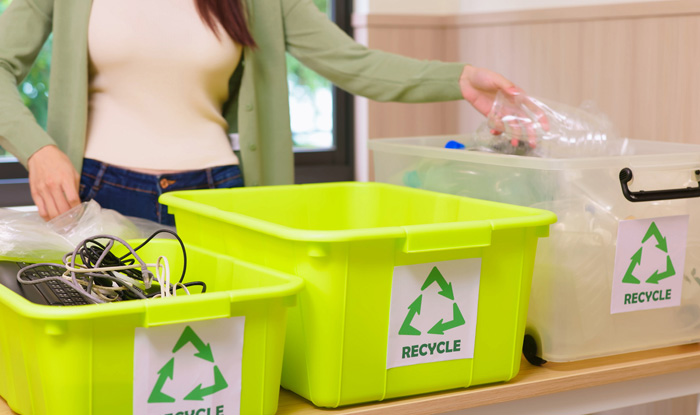
E-waste is very dangerous because it combines toxic materials such as lead and mercury with high-value resources like gold, copper as well as lithium. When dumped or informally recycled, these materials can contaminate ecosystems and impact human health. So its important to recycle them responsibly as that helps reduce mining, cut emissions, and recover resources critical to modern economies.
Improper processes for disposal also put sensitive data at risk and undermine climate goals. Recycling e-waste responsibly helps protect data, streamlines ITAD for businesses to help communities achieve their sustainable goals. Let’s explore all the reasons for recycling e-waste in detail and discover how you can play a key role in secure disposal.
- What is E-Waste Asset Recycling?
- Top 10 Reasons to Recycle E-Waste
- Environmental Protection
- Resource Conservation
- Climate Action and Emissions Reductions
- Public Health and Community Safety
- Economic Value and Job Creation
- Data Security and Responsible Disposal
- National Security and Strategic Resource Interests
- Ethical and Social Responsibility
- Technological Advancement/Innovation Incentives
- Community Engagement and Collective Action
- Why Recycling is a Necessity: Work with a Certified Partner
- FAQs
- 1. Why is e-waste more dangerous than regular waste?
- 2. What materials make e-waste recycling so valuable?
- 3. How does recycling e-waste help fight climate change?
- 4. Why should businesses prioritize e-waste recycling beyond compliance?
- 5. Is all e-waste labeled ‘recycled’ actually recycled responsibly?
What is E-Waste Asset Recycling?
It is an extensive, value-driven process that treats retired devices as recoverable assets. So they keep their financial, material, and informational value instead of becoming trash. For businesses, this approach integrates data security, compliance, resale, and certified recycling into a single strategy.
E-waste asset recycling focuses on:
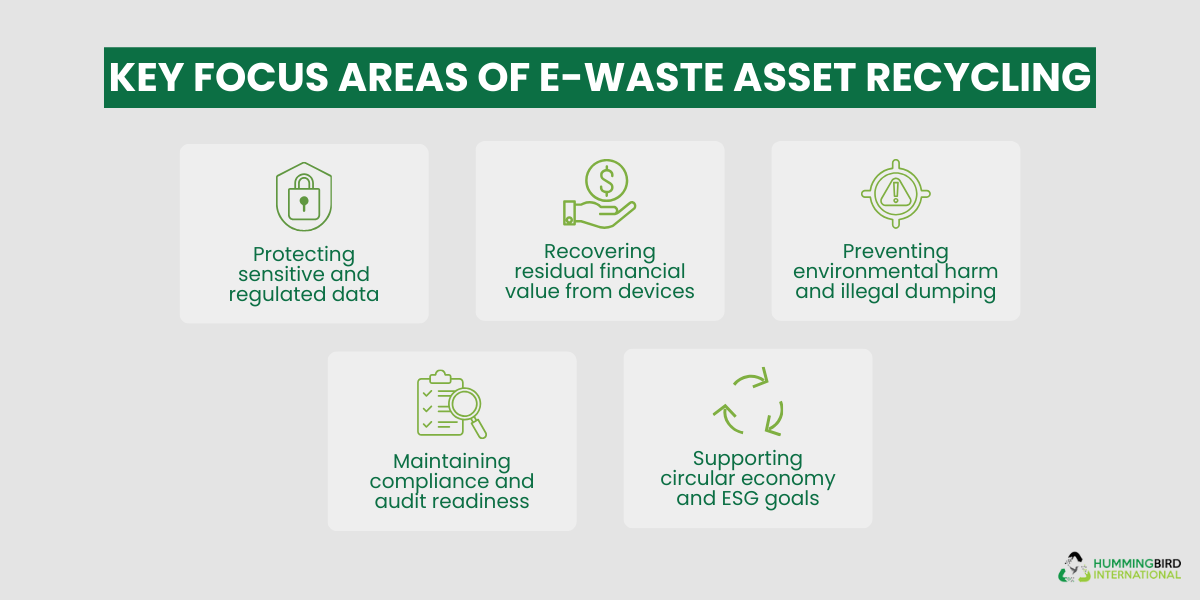
- Protecting sensitive and regulated data
- Recovering residual financial value from devices
- Preventing environmental harm and illegal dumping
- Maintaining compliance and audit readiness
- Supporting circular economy and ESG goals
E-Waste Asset Recycling vs. Traditional Disposal
| Aspect | Traditional Disposal | E-Waste Asset Recycling |
| View of devices | Waste to be removed | Assets to be recovered |
| Data handling | Often ignored or inconsistent | Certified data sanitization or destruction |
| Environmental outcome | Landfilling or informal recycling | Certified recycling and reuse |
| Compliance | High risk | Documented, auditable |
| Financial impact | Cost center | Cost recovery through resale & reuse |
Key Elements of E-Waste Asset Recycling
When you work with a certified ITAD partner, the process becomes quite smooth. There are a few key factors to consider with e-waste asset recycling that include:
Secure Data Sanitization/Destruction
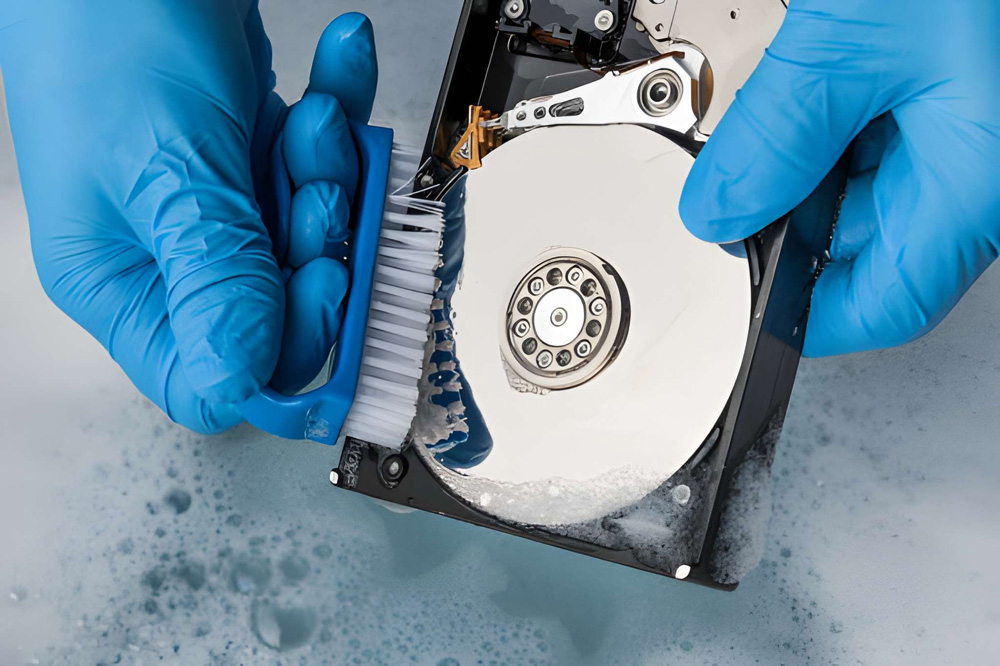
Image Source: iStock/D-Keine
Before any electronic asset is reused or recycled, data security is the first priority. This includes certified wiping for reusable devices and physical destruction for drives that contain highly sensitive data. Proper documentation allows for compliance with data-protection laws and internal security policies.
Key data protection practices include:
- Software-based data wiping aligned with NIST standards
- Verification reports confirming successful sanitization
- Degaussing for magnetic media where applicable
- Physical destruction (shredding or crushing) for high-risk or end-of-life drives
- Chain-of-custody documentation from pickup to destruction
Asset Recovery and Value Optimization
Image Source: iStock/KanawatTH
Many devices have significant resale or reuse value, especially enterprise equipment. Asset recycling programs assess devices for refurbishment for monetary value, redeployment, or resale before recycling is considered.
Value optimization typically involves:
- Asset testing and functional grading
- Secure refurbishment and component replacement
- Internal redeployment to extend device life
- Remarketing through controlled resale channels
- Revenue recovery reporting for finance teams
Certified Recycling and Downstream Transparency

Image Source: iStock/Petmal
When devices can no longer be reused, they enter certified recycling streams designed to safely recover materials and prevent environmental harm. Responsible recycling helps with these aspects:
- No illegal export or dumping
- Safe handling of hazardous components
- Audited downstream vendors
- Full traceability of recovered materials
| Certification | What it Provides |
| R2 / R2v3 | Responsible recycling and downstream audits |
| e-Stewards | No export, no prison labor, strict controls |
| ISO 14001 | Environmental management systems |
| NAID AAA | Verified secure data destruction |
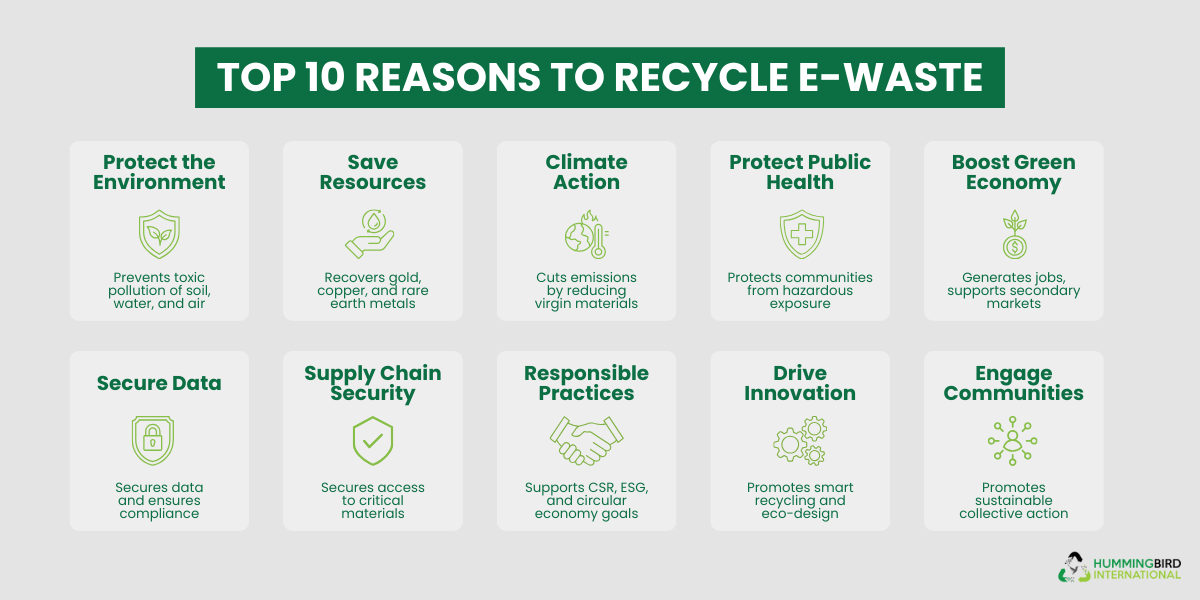
Top 10 Reasons to Recycle E-Waste
By recycling electronics responsibly, businesses can work for environmental, economic, strategic, and social benefits that go far beyond diverting waste from landfills.
Here are all the major reasons to recycle e-waste.
-
Environmental Protection
With controlled and certified recycling, it’s a lot easier to make sure that hazardous substances are safely disposed of. The process also prevents environmental leakage and ensures that materials are checked in regulated facilities designed to protect ecosystems.
Key environmental benefits of recycling e-waste include:
- Preventing toxic leachate from contaminating groundwater and agricultural land
- Reducing air pollution caused by informal burning and dump fires
- Lowering greenhouse gas emissions by avoiding energy-intensive material production
- Preserving biodiversity by limiting toxic exposure across ecosystems
Electronic devices contain heavy metals (lead, mercury, cadmium), brominated flame retardants, and persistent organic pollutants. All of these factors lead to serious environmental risks when devices are landfilled, burned, or dismantled informally.
When e-waste is improperly disposed of:
- Toxins seep into soil and groundwater through leachate
- It contaminates surface water and is released into the air through uncontrolled burning or accidental fires at dumpsites
- Lithium-ion batteries further increase the risk of landfill fires that release toxic gases
The environmental cost of improper disposal is more than the investment required for responsible recycling. So prevention at the source is the most effective strategy.
Improper Disposal vs Responsible Recycling
| Aspect | Improper Disposal (Landfill / Informal Recycling) | Responsible E-Waste Recycling |
| Soil & Water | Toxic metals leach into groundwater | Hazardous materials safely contained |
| Air Quality | Burning releases dioxins & heavy metals | Controlled processing, emissions managed |
| Climate Impact | Higher emissions from virgin material mining | Lower carbon footprint via material recovery |
| Biodiversity | Ecosystem poisoning & bioaccumulation | Reduced ecological damage |
| Long-Term Risk | Persistent pollution | Circular resource recovery |
-
Resource Conservation
Compact devices like smartphones concentrate dozens of recoverable elements into a single product. This makes them both resource-rich and environmentally risky if discarded improperly.
Recycling e-waste enables:
- Recovery of precious metals from printed circuit boards
- Extraction of copper and aluminum from wiring and housings
- Reclamation of rare earths from motors, speakers, and displays
- Safe recovery of battery metals is critical for energy storage and EVs
Modern electronics have concentrations of materials that work better than new resources. Circuit boards, wiring, displays, and batteries contain:
- Gold, silver and palladium
- Copper and aluminum
- Rare earth elements
- Lithium, cobalt, and nickel
Recycling e-waste allows for closed-loop material systems, where recovered materials re-enter manufacturing. It also reduces reliance on environmentally destructive mining. Electronic waste goes from being a liability to a strategic secondary resource.
-
Climate Action and Emissions Reductions
Electronics have carbon from mining, refining, manufacturing, and global transport. Recycling e-waste dramatically lowers emissions by reducing demand for material extraction and processing.
For example:
- Recycling aluminum saves up to 95% of the energy compared to primary production
- Copper and steel recycling reduce emissions by 60–70%
- Recovering rare metals avoids some of the most carbon-intensive mining activities
E-waste recycling directly supports national climate commitments and corporate decarbonization strategies. It contributes to Scope 3 emissions reductions and circular-economy targets.
By integrating recycling into procurement and disposal strategies, organizations convert waste management into a measurable climate action.
-
Public Health and Community Safety
Improper e-waste recycling is a public-health crisis. Informal practices such as open burning, acid leaching, and manual dismantling without protection expose workers to extremely harmful elements.
It has led to severe health risks that include:
- Respiratory and cardiovascular disease from toxic fumes
- Neurological damage caused by lead and mercury exposure
- Spread of toxins in food chains, affecting entire populations
Certified e-waste pickup and recycling services reduce these risks by making sure that occupational safety standards are implemented. By partnering up with one, you also opt for controlled processing and environmental safeguards that protect both workers and nearby communities.
-
Economic Value and Job Creation
E-waste recycling is a powerful driver of green economic growth. Unlike landfilling or incineration, recycling supports skilled jobs across multiple stages of the value chain.
These include:
- Collection and logistics
- Sorting and dismantling
- Refurbishment and repair
- Advanced materials recovery
Recycling is known to create significantly more jobs per ton of waste than disposal-based systems. Refurbishment and resale markets also extend product life, generate revenue, and improve the affordability of technology.
Local economies benefit from:
- Formal employment opportunities
- Value recovery from materials
- Growth of secondary markets and repair ecosystems
In the end, these factors work well to promote economic value and result in a higher growth in terms of jobs created.
Recycling vs Landfilling: Economic and Social Impact
| Metric | Recycling | Landfilling / Incineration |
| Jobs created | High (collection, repair, recovery) | Low |
| Local economic benefit | Strong | Minimal |
| Worker safety | Regulated standards | Often unsafe |
| Resource recovery | High | Near zero |
| Community health | Protected | At risk |
-
Data Security and Responsible Disposal
Many electronics are used to store personal, corporate, and government data. Improper disposal exposes organizations to identity theft, regulatory penalties, and corporate espionage.
Informal recycling and resale channels frequently fail to erase data properly, making discarded devices a major cybersecurity risk.
Certified e-waste recycling addresses this through:
- Secure data wiping aligned with recognized standards
- Physical destruction where required
- Chain-of-custody documentation and audit trails
For businesses, secure recycling is not optional. It is a very important stage of risk management and compliance.
-
National Security and Strategic Resource Interests
Many materials found in electronics are strategic minerals essential to defense systems, renewable energy and advanced manufacturing.
Recycling helps:
- Reduce dependence on foreign mining and volatile regions
- Secure domestic supply chains for critical materials
- Strengthen position against trade disruptions
Responsible recycling is almost considered as part of industrial and national security policy today.
-
Ethical and Social Responsibility
Recycling e-waste is now an ethical obligation for both corporations and communities to minimize harm and manage technology responsibly. It works with different aspects like:
- Circular economy principles
- Corporate social responsibility (CSR) commitments
- Environmental, Social, and Governance (ESG) performance expectations
Consumers and investors pay a lot of attention to how companies handle end-of-life electronics. This makes responsible recycling a key factor in brand trust and market competitiveness.
-
Technological Advancement/Innovation Incentives
Investment in e-waste recycling drives innovation across multiple fields, including:
- AI-powered sorting and robotics
- Advanced metallurgy and hydrometallurgical recovery
- Digital tracking, material passports, and traceability systems
These technologies improve recovery rates, reduce environmental impact, and influence eco-friendly design incentives too.
-
Community Engagement and Collective Action
Effective e-waste recycling depends on community participation. Take-back programs, local drop-offs, and education campaigns:
- Improve collection rates
- Reduce contamination
- Build long-term awareness
Partnerships with schools, universities, and community organizations turn recycling into a shared responsibility. This helps encourage sustainable behavior across generations.
Why Recycling is a Necessity: Work with a Certified Partner
As electronic consumption accelerates, the consequences of improper disposal become more severe. There is a higher risk of polluted ecosystems, loss of critical materials, data breaches, and public-health risks.
Responsible e-waste recycling transforms this growing challenge into an opportunity. It protects the environment, conserves scarce resources, lowers carbon emissions, strengthens supply chains, creates jobs and safeguards sensitive data. For businesses, recycling e-waste through a certified pickup service is one of the most practical ways to contribute to their growth and reduce environmental liability.
FAQs
1. Why is e-waste more dangerous than regular waste?
It contains a concentrated mix of toxic substances and persistent pollutants. Electronics include heavy metals such as lead, mercury, cadmium, and chromium, along with different hazardous elements. They also carry brominated flame retardants. When e-waste is dumped in landfills or processed informally, these toxins can leach into groundwater, contaminate soil, or be released into the air through burning.
Unlike organic waste, these contaminants do not break down naturally. They bioaccumulate in plants, animals, and humans, increasing long-term risks such as neurological damage, respiratory illness, developmental disorders, and cancer. This makes improper e-waste disposal not just a waste management issue, but a public health and environmental protection crisis that requires specialized recycling infrastructure.
2. What materials make e-waste recycling so valuable?
A single smartphone or laptop contains dozens of elements, including precious metals (gold, silver, palladium), industrial metals (copper, aluminum), rare earth elements (neodymium, dysprosium), and battery materials (lithium, cobalt, nickel). The concentration of these metals in discarded electronics is higher than in natural ores, making recycling quite valuable.
Recovering these materials through certified recycling reduces pressure on environmentally destructive mining operations and stabilizes supply chains. It also supports manufacturing demand for clean-energy technologies, defense systems and consumer electronics.
3. How does recycling e-waste help fight climate change?
Most emissions occur during raw material extraction, refining, and manufacturing, not during use. Recycling e-waste avoids much of this embedded carbon by replacing new materials with recovered ones. For example, recycling aluminum can save up to 95% of the energy required to produce it from bauxite, while copper and precious metal recycling also deliver substantial emissions reductions.
When combined with reuse and refurbishment, recycling becomes a powerful climate mitigation tool, aligned with global agreements such as COP21 and net-zero commitments.
4. Why should businesses prioritize e-waste recycling beyond compliance?
E-waste recycling is a strategic risk-management and value-creation activity. Improper disposal can expose organizations to data breaches, regulatory fines, intellectual property loss, and reputational damage. With certified recycling, you can follow secure data destruction, documented compliance, and responsible downstream handling.
Structured recycling programs also have financial and operational benefits. Reusable devices can be redeployed or resold, material recovery could cover disposal costs and transparent reporting strengthens ESG disclosures.
5. Is all e-waste labeled ‘recycled’ actually recycled responsibly?
No. A significant portion of e-waste that is collected or labeled as ‘recycled’ never reaches safe, regulated facilities. Sometimes, large volumes are exported illegally or processed informally, being labeled for reuse or second-hand goods. In countries with limited infrastructure, devices are dismantled by hand, burned, or acid-leached, causing severe environmental and health damage.
For real impact, organizations and individuals must choose recyclers that provide traceability, audits and verifiable environmental and data-security protections.


Leave a Reply