
As technology refresh cycles accelerate, organizations are retiring IT assets faster than ever. The ITAD market was valued at approximately $21.77 billion in 2026 and is projected to exceed over $48.48 billion by 2034. But what happens next is no longer a simple operational decision. It’s a financial, environmental, and governance choice that can directly impact balance sheets, compliance posture, and ESG performance metrics.
Organizations face a critical decision when IT assets reach end-of-life: should they liquidate to recover value or recycle to meet sustainability compliance requirements?
On the surface, IT asset liquidation seems like the financially smarter move, while recycling appears to be the environmentally responsible path. In reality, the decision is far more nuanced. It involves balancing short-term revenue recovery against long-term ESG commitments, regulatory risk exposure, carbon footprint, and reputational impact.
For IT leaders, CFOs, and sustainability teams, the question isn’t simply “Which option costs less?” — it’s “Which strategy aligns with our financial goals, compliance requirements, and ESG objectives?”
In this blog, we analyze the financial and ESG tradeoffs of liquidation vs recycling, helping you determine the right approach for your organization’s IT asset disposition strategy.
- What Is IT Asset Liquidation?
- What is IT Asset Recycling?
- Financial Comparison: Liquidation vs Recycling
- ESG & Compliance Tradeoffs
- Risk Analysis: Data Security & Regulatory Exposure
- When Liquidation Is the Better Choice?
- When Recycling Is the Strategic Option?
- The Hybrid Model: A Tiered ITAD Approach
- Conclusion
- FAQs
What Is IT Asset Liquidation?
As a way to recoup costs, IT asset liquidation involves selling surplus or obsolete IT gear, such as computers, servers, storage infrastructure, and networking hardware, on secondary markets.
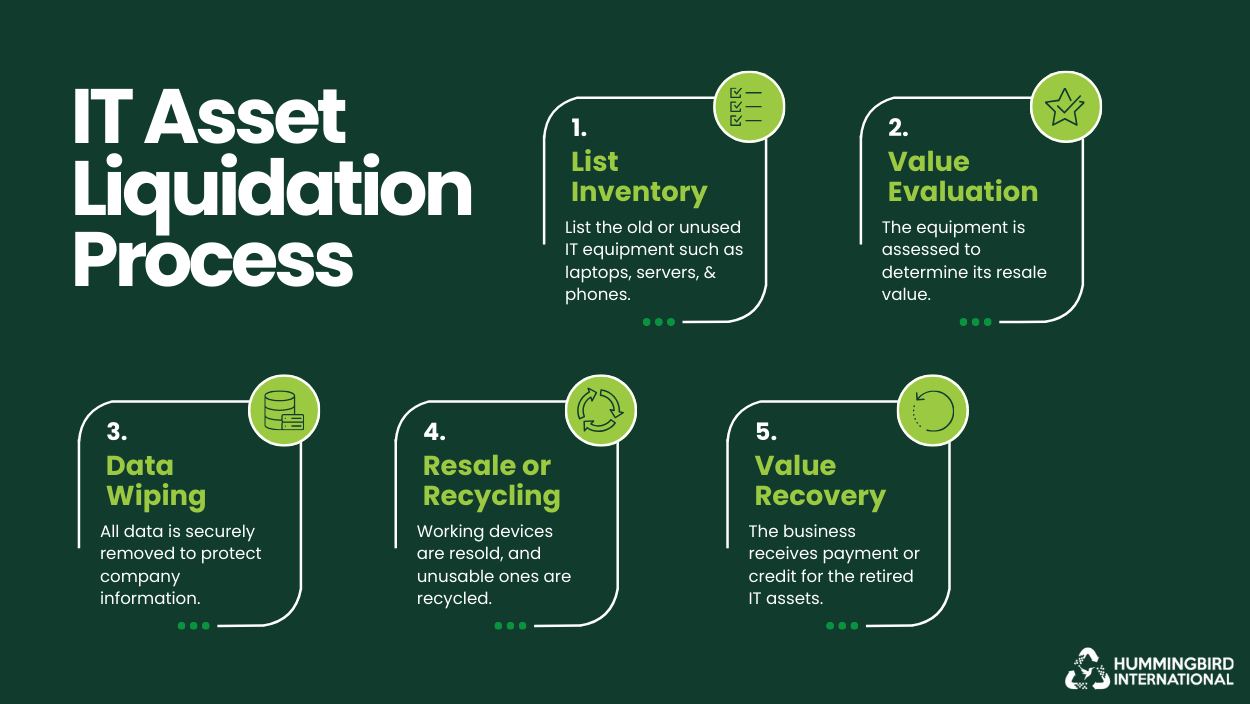
As part of an organized IT asset disposition program, liquidation helps businesses fund new technology while still adhering to compliance and data security requirements.
Organizations typically engage a certified ITAD partner to:
- Audit, test, and grade equipment
- Perform documented data sanitization or destruction
- Refurbish viable assets
- Facilitate resale through vetted domestic or global channels
When carried out legally, liquidation turns old, broken-down equipment into a trackable asset recovery stream, helping both financial efficiency and the circular economy.
What is IT Asset Recycling?
Recycling IT assets means dismantling old computers in an environmentally responsible manner while recovering the raw materials. E-waste recycling doesn’t prioritize resale value like bankruptcy does. Instead, assets are processed by authorized downstream vendors to recover goods for reuse.
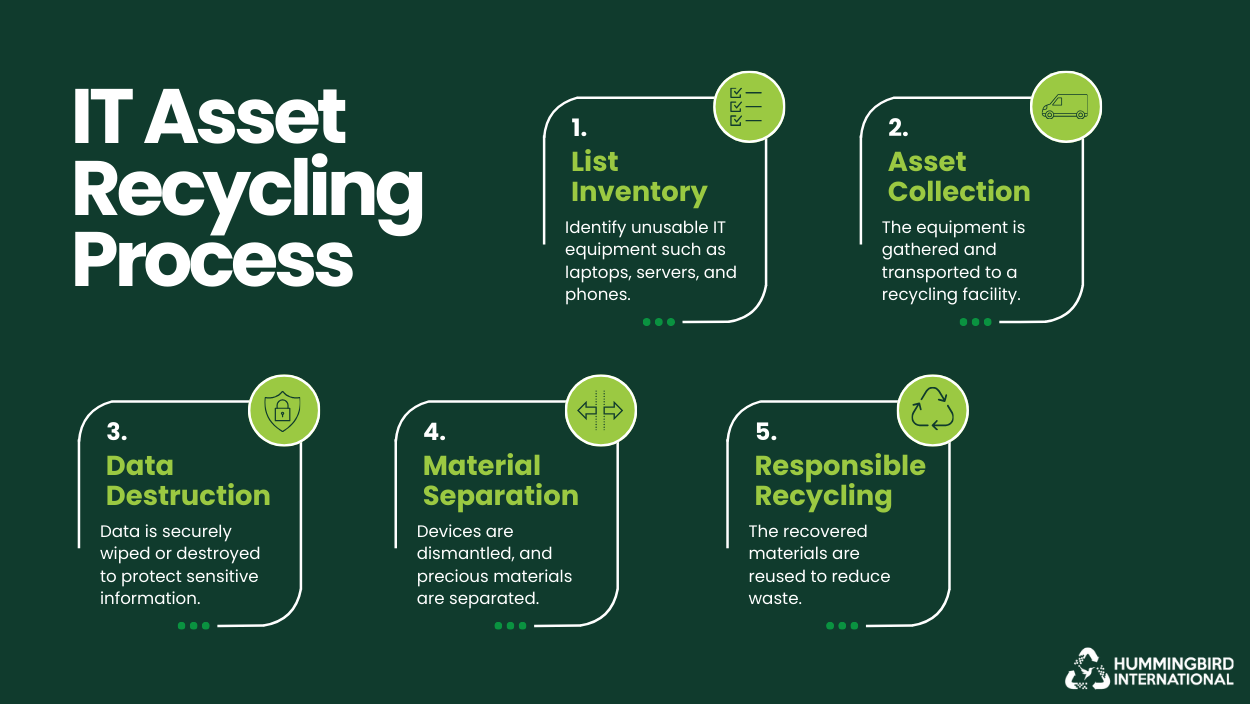
These materials may include:
- Copper
- Aluminum
- Plastics
- Rare earth elements
Global e-waste is on track to hit 82 Mt annually by 2030, according to the Global E-waste Monitor. Improper handling contributes to environmental degradation, regulatory violations, and economic loss.
Within a compliant ITAD framework, recycling supports:
- Regulatory adherence and environmental reporting
- Reduced landfill exposure
- Verified downstream accountability
- Material recovery within a circular economy model
Recycling secures a proper disposal of old or broken equipment for businesses while lowering environmental and legal risks.
Financial Comparison: Liquidation vs Recycling
When looking at liquidation and recycling through a financial lens, it’s not enough to just compare resale income to material recovery value. Companies need to look at the stage of the lifecycle, the condition of the assets, the demand in the market, and their legal responsibilities.
-
Revenue Potential
Revenue potential varies significantly by asset age, condition, and secondary-market demand. Liquidation can bring in a lot of money for business-grade equipment that is still usable, but recycling usually only brings in a few dollars for things that are still useful.
Here’s a comparison between liquidation and recycling:
| Criteria | IT Asset Liquidation | IT Asset Recycling |
| Primary Financial Outcome | Direct resale revenue from secondary markets | Limited commodity-based material recovery |
| Revenue Predictability | Market-dependent but often measurable for newer assets | Highly dependent on fluctuating commodity prices |
| ROI Potential | Higher ROI for enterprise-grade assets (0–5 years old) | Minimal ROI; typically offsets processing costs only |
| Impact on IT Budget | Can offset refresh cycle costs and improve budget efficiency | Generally treated as a disposal expense |
| Value Recovery Stage | Captures residual value before full depreciation | Recovers value only at the raw material level |
| Best Use Case | Functional, refurbishable, in-demand equipment | Obsolete, damaged, or non-marketable assets |
-
Lifecycle Value Perspective
From a lifecycle standpoint, liquidation extends asset life and recovers its residual value earlier in the depreciation curve. On the other hand, when you recycle, you only get value at the material level after functional repair is no longer possible.
A tiered ITAD approach usually gets the best results:
- Resell functional and refurbishable devices
- Recycle old or broken electronics that can’t be fixed or recovered
When properly integrated, this hybrid approach balances financial recovery with environmental accountability. This approach eliminates the need to choose between the two.
ESG & Compliance Tradeoffs
IT asset disposal choices in businesses are increasingly aligned with ESG reporting requirements and sustainability frameworks, as well as United Nations Global Compact-backed projects.
When you choose between recycling and liquidation, it changes how you measure environmental effect, how you report on governance, and who you are accountable to further down the line.
Environmental Impact

Image Source: iStock/FG Trade Latin
Environmental considerations play a central role in IT asset disposition decisions. By extending device lifetimes or recovering raw materials, both disposal and recycling affect the carbon footprint, resource use, and landfill trash. But in different ways that are better for the environment.
Liquidation:
- Extends product lifecycle and delays new manufacturing demand
- Reduces embedded carbon associated with device production
- Supports circular economy reuse models
Recycling
- Limits demand for newly extracted raw materials
- Prevents hazardous waste from entering landfills
- Enables responsible material recovery through certified downstream processing
Both pathways help reach ESG goals, but they have different effects on sustainability measures. Liquidation improves metrics for extending an item’s life, while recycling improves metrics for recovering materials and adhering to environmental rules.
Governance & Reporting

Image Source: iStock/Thicha Satapitanon
IT asset disposition choices have significant effects on governance and regulations, as well as on environmental concerns. Legal, financial, and reputational risks can be reduced by ensuring proper paperwork, vendor oversight, and the ability to be audited.
Recycling often provides:
- Certificates of destruction and recycling
- Downstream vendor transparency and accountability
- Environmental and regulatory compliance documentation
- Reporting support for ESG disclosures and sustainability audits
These records help demonstrate responsible handling, especially in jurisdictions with strict e-waste and environmental regulations.
Liquidation requires:
- Certified data destruction in accordance with recognized standards
- Serialized audit trails for asset tracking
- Documented chain-of-custody controls
- Clear resale channel transparency
Companies could have data breaches, fines from regulators, and gaps in their ESG reporting if they don’t have proper oversight in either road. A structured ITAD system ensures that governance needs are met while maintaining environmental and financial integrity.
Risk Analysis: Data Security & Regulatory Exposure
Financial recovery and sustainability performance mean little if data security controls are compromised. Protecting private information is one of the most important and often overlooked considerations when deciding whether to liquidate or recycle e-waste.
If you handle or sell assets without properly sanitizing their data, it could lead to:
- Regulatory fines and legal exposure
- Data breaches involving customer or proprietary information
- Reputational damage and loss of stakeholder trust
Standards such as the National Institute of Standards and Technology (NIST 800-88) outline best practices for secure media sanitization and verification. Aligning ITAD processes with recognized standards is essential for mitigating risks.
Regardless of the road of disposition, a legal ITAD strategy must consist of:
- Verified deletion of data with validation reports
- When policy or law calls for it, physical destruction
- Tracking assets by serial number and keeping records of the chain of care
Without these protections, businesses take on extra regulatory and operational risk, which can turn the choice to sell an asset into a possible liability event.
When Liquidation Is the Better Choice?
When companies want to maximize the value of their remaining assets while still meeting compliance and environmental standards, liquidation is the best option.
Liquidation is most effective when:
- Assets are within a 0-5-year lifecycle window
- Equipment is enterprise-grade and retains secondary market demand
- Devices are fully functional or economically refurbishable
- The organization prioritizes measurable ROI and budget offset
Structured reselling programs help keep products valuable before they fully depreciate. From an ESG perspective, reusing often saves a significant amount of carbon by delaying the need for new manufacturing.
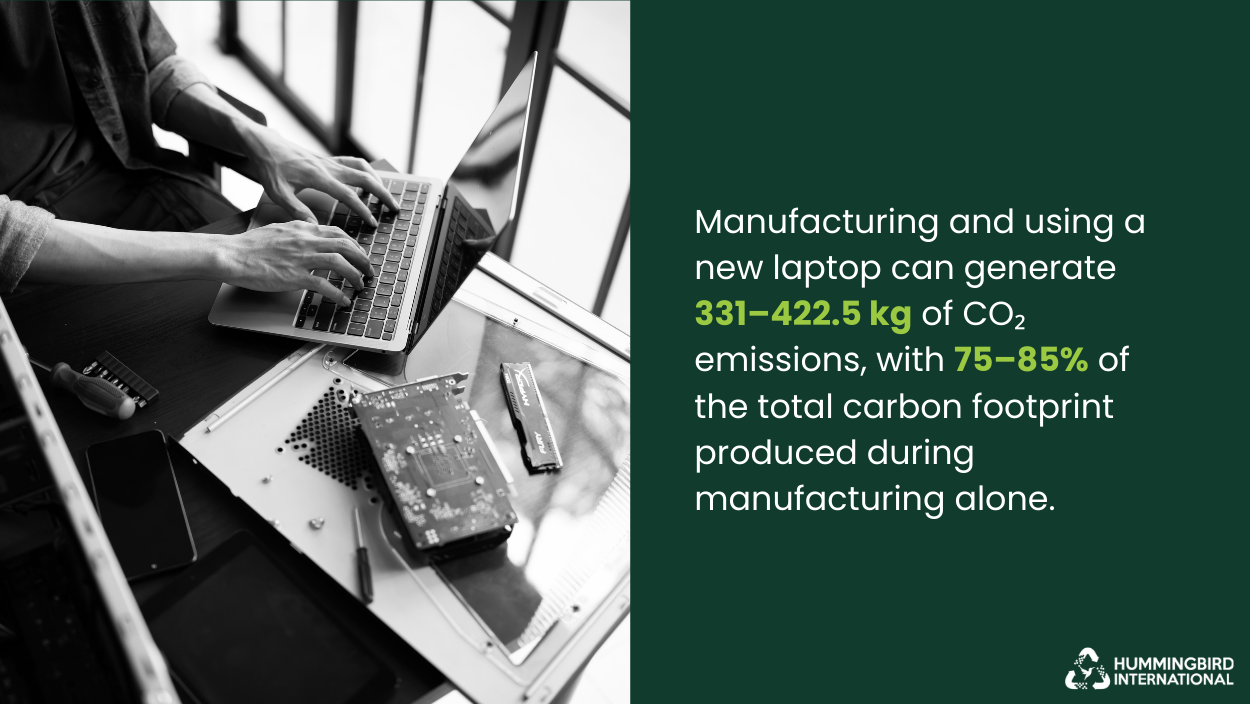
According to research, a new laptop’s total carbon footprint from manufacturing to shipping and use over its lifetime is between 331 kg and 422.5 kg (carbon dioxide equivalent). Manufacturing generates 75-85% of these emissions.
When liquidation is part of an ITAD system that follows the rules, it supports both financial optimization and circular-economy goals.
When Recycling Is the Strategic Option?
When it’s no longer possible to make money or when environmental and legal duties take priority, recycling becomes the right thing to do. Most of the time, recycling is the best option when:
- Outdated, broken, or unrepairable equipment
- The costs of repairs are higher than the expected selling value
- Government rules require approved destruction
- Material recovery and trash diversion are top priorities for sustainability goals.
Recycle electronics in a way that protects the earth and complies with e-waste rules. In a structured enterprise e-waste recycling program, certified recycling protects responsibility further down the chain and supports ESG reporting and environmental risk management.
The Hybrid Model: A Tiered ITAD Approach
For most enterprises, liquidation and recycling are not mutually exclusive decisions. Instead, leading organizations implement a tiered ITAD strategy that aligns financial recovery with compliance and ESG objectives.
A structured hybrid model typically follows this sequence:
- Evaluate assets for resale eligibility
- Refurbish viable equipment to maximize residual value
- Recycle non-recoverable components through certified downstream partners
This integrated approach maximizes:
- Residual value capture
- ESG reporting performance
- Data security and regulatory compliance
- Operational risk mitigation
By reselling and recycling responsibly within a legal framework, businesses ensure they don’t lose value and comply with environmental and government regulations.
Conclusion
You shouldn’t consider liquidation and recycling as two different objectives. In a structured ITAD strategy, they both play different but necessary roles. When programs work, they ensure that approved recycling occurs when needed and maintain strict controls on compliance and data security.
This tiered method does more than just manage assets that are nearing the end of their useful life. In a single, unified framework, they improve financial success, boost the credibility of ESG reporting, and lower regulatory risk.
The real advantage lies not in choosing one pathway over the other, but in deploying each with transparency and strategic intent.
FAQs
-
How to dispose of IT assets?
Organizations should only use certified data destruction methods, such as safe software-based overwriting, degaussing, and shredding physical media, to fully protect their data. Working with companies that follow well-known standards like ISO 27001 is one way to ensure that the disposal of IT assets meets strict security and legal standards.
-
What is the best way to liquidate assets?
The best way to liquidate assets is through a certified IT asset disposition (ITAD) provider that evaluates, sanitizes, refurbishes, and resells equipment via vetted secondary markets. This ensures maximum residual value recovery, secure data destruction, documented chain-of-custody and full regulatory compliance while minimizing financial and reputational risk.
-
What is the IT asset management disposal process?
The IT asset management disposal process, or IT Asset Disposition (ITAD), is the secure, compliant, and environmentally responsible retirement of end-of-life IT equipment. It involves auditing assets, permanent data destruction, and responsible recycling, resale, or donation, while maintaining a strict chain of custody and legal compliance.
-
Does liquidation increase data security risk?
Liquidation does not increase risk when executed through certified ITAD controls. Risk arises from improper data sanitization and a lack of oversight. The process of closing a business often leads to the hasty disposal of IT equipment and a lack of oversight, creating substantial risks of data breaches, regulatory non-compliance, and reputational damage.
-
Can one ITAD strategy include both liquidation and recycling?
Yes, a single IT Asset Disposition (ITAD) strategy can, and often should, include both liquidation and recycling. This approach is designed to maximize the residual value of retired assets while ensuring that any equipment that is broken or obsolete is handled in an environmentally responsible manner.


Leave a Reply