Recycling e-waste helps the environment. It also supports the economy in ways most people don’t see, like job growth, material recovery, and lower costs for new products.
Here is a concrete data point. to underline that fact: A Minnesota-based advocacy report from Repowered estimated that if Minnesota recycled 100% of its e-waste (about 266 million pounds at the time of research), the state could unlock major economic and material benefits.
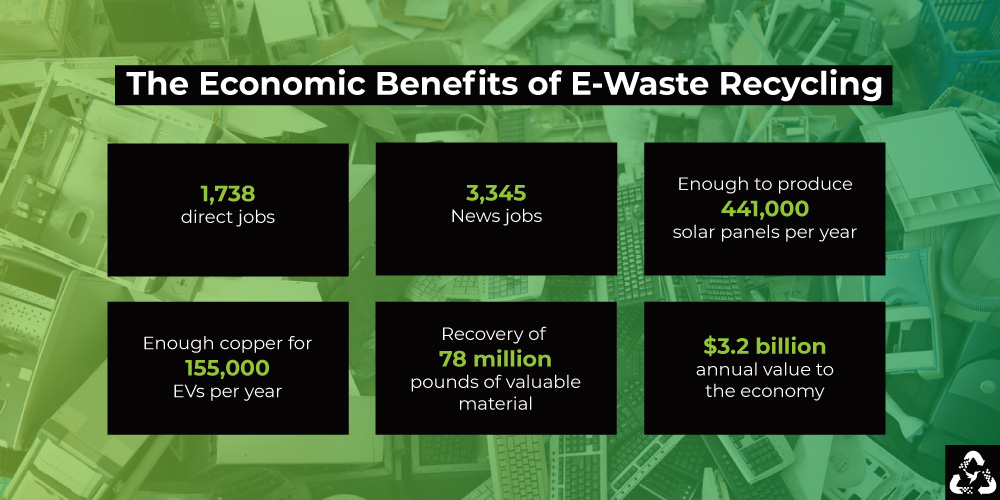
Research-based estimates of the economic impact of e-waste recycling in Minnesota | Source: Repowered
- 1,738 direct jobs
- 3,345 total new jobs
- Enough materials to support solar panel production (estimated 441,000 panels/year)
- Enough recovered copper to support EV production (estimated 155,000 EVs/year)
- Recovery of 78 million pounds of valuable material
- Estimated $3.2B in annual economic value
E-waste recycling creates jobs, recovers high-value metals, and feeds secondary markets. For businesses, it can also reduce data risk when you use secure processing and documented data destruction.
6 Economic Benefits of E-Waste Recycling
Now let’s break down the economic wins in plain terms. Each section ties back to a practical outcome for organizations, communities, or both.
1. E-waste recycling & job creation
E-waste recycling supports job creation with technicians needed for logistics, sorting, refurbishment, repair, and recycling operations. It also creates work in compliance, quality control, and downstream reporting.
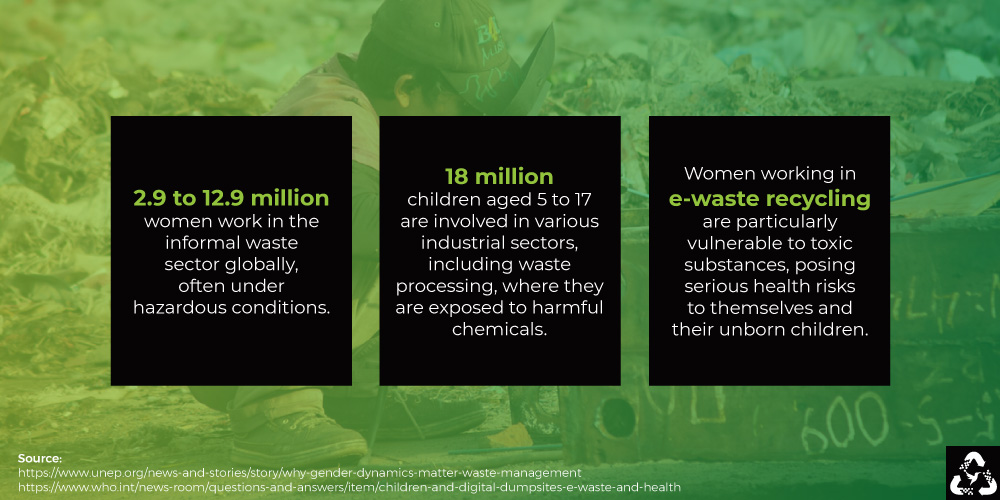
Today, the global recycling ecosystem is mostly run through informal operations, where untrained people dismantle devices without protective gear and without safe handling for toxic components.
In order to ensure the e-waste recycling is done through a formal, standardized recycling process, certified vendors are needed who follow regulations and replace unsafe work with trained jobs, safer facilities, and clearer accountability. The International Labour Organization has also highlighted the scale of discarded e-waste and its potential for job creation.
If you’re evaluating vendors, prioritize proof of safe operations and security controls. Start with how to find a certified ITAD partner.
2. Resource recovery
E-waste contains valuable metals and materials. When recyclers recover them, those materials re-enter supply chains instead of being lost in landfills.
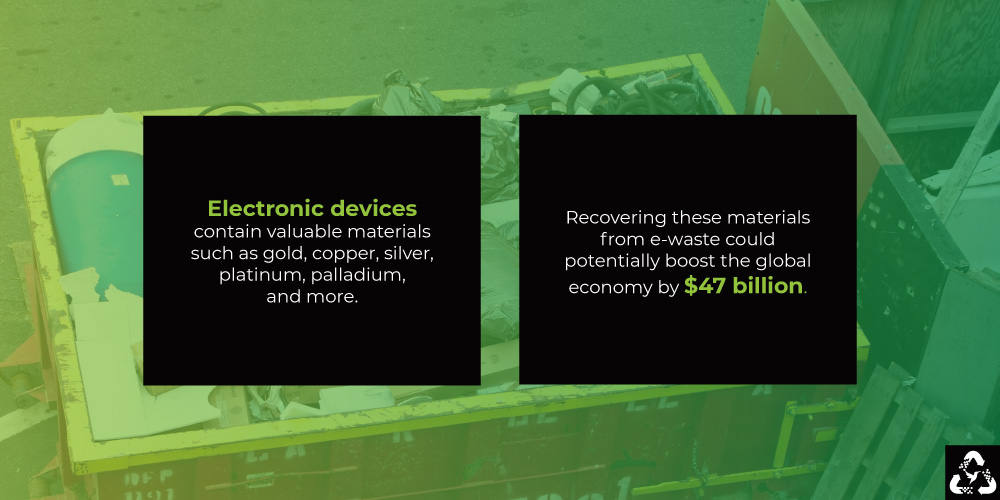
This is why we often call e-waste an opportunity. It’s a practical path toward lower material costs and less dependence on virgin mining.
Want a closer look at what’s inside devices? Read the materials inside electronic devices.
| Material | Where It’s Found | Why It Matters |
| Gold | Circuit boards, connectors | High value; strong conductivity |
| Copper | Wiring, motors, power components | Critical for energy and EV supply chains |
| Silver | Switches, connectors, boards | High conductivity; reusable in manufacturing |
| Platinum / Palladium | Boards and specialized components | High value; used in advanced electronics |
3. Revenue generation from secondary markets
Secondary electronics markets turn repaired and refurbished devices into affordable products. That creates revenue for refurbishers and helps more people access reliable tech.
As these markets grow, they also expand the workforce of technicians and IT asset recovery teams. For more context, explore trends in e-waste recycling.
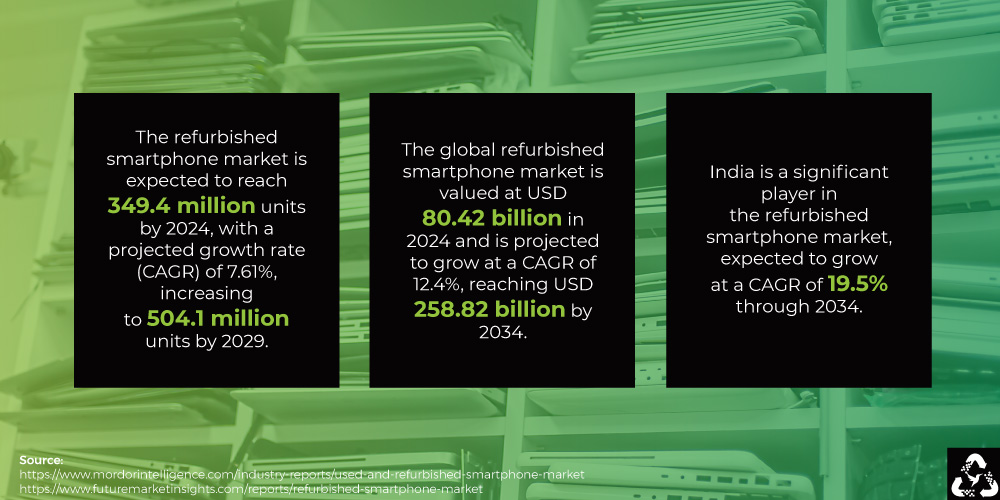
If you manage business assets, this also connects to ITAD value recovery. A structured program helps you decide what to redeploy, what to refurbish, and what to recycle.
4. Increased affordability of new technology
Recycling supports affordability in two ways. First, refurbished devices cost less than new ones. Second, recovered metals can reduce input costs for manufacturers.
Using recycled materials can also reduce transport and extraction impacts, which supports a lower overall footprint. If you want a practical lens on device impacts, read the eco footprint of gadgets.

Image Source: iStock/izusek
5. Promotion of green technologies
When organizations build sustainability into operations, they push the market forward. That momentum accelerates investment in cleaner systems, better recycling methods, and new product designs.
This is one reason e-waste work often links to broader sustainability strategies. For a big-picture view, see what it takes to end the e-waste problem. For leaders who prefer visual summaries, use this e-waste infographic.
As demand for greener products grows, companies compete on sustainability features. That competition can drive real innovation, especially when recycling and material recovery become standard inputs.
6. Circular economy
All the benefits above connect. When you recycle devices, you recover materials. When you recover materials, you reduce costs and keep supply chains moving. When you support repair and resale, you expand access and reduce waste.
Image Source: iStock/Khanchit Khirisutchalual
This model has a name: the circular economy. It focuses on keeping products and materials in use longer, reducing waste, and improving the full value chain.
When businesses make recycling part of standard operations, they contribute directly to circular outcomes. That includes lower disposal risk, better recovery rates, and stronger sustainability reporting.
| Step | What Happens | Economic Benefit |
| Resource recovery | Metals and materials are reclaimed | Reduces material costs and supply risk |
| Refurbishment | Devices are repaired and resold | Creates revenue and skilled jobs |
| Affordable tech | Access increases through lower prices | Supports communities and local markets |
| Reintegration | Materials go back into new products | Lowers mining demand and stabilizes supply |
If you manage office IT assets, a structured pickup and reporting program helps you recover value and reduce risk.
Start with this ITAD partner checklist and plan secure handling with documented data destruction.
Conclusion
E-waste recycling is a strong move for climate goals, but it also supports the economy. It creates jobs, brings valuable materials back into circulation, lowers manufacturing costs, and strengthens the circular economy.
If you’ve been looking for a practical way to make operations more sustainable, start here. The benefits stack up fast when recycling becomes a repeatable system instead of a one-time cleanup.
FAQs
What types of electronic devices in business qualify as e-waste?
E-waste includes anything with a plug or battery that you no longer use. Examples include phones, laptops, TVs, cables, and electronics. If it contains circuitry, it usually counts.
How do I know if an e-waste recycler is certified or trustworthy?
Look for certifications such as R2 (Responsible Recycling) or e-Stewards. Certified recyclers follow environmental and safety standards and typically provide documentation for processing and data controls.
How can I recover value when I recycle old electronics?
When you use certified recyclers you can recover value as they will pay for devices that can be resold or refurbished.


Leave a Reply