
If you live in Pennsylvania and plan to throw out old electronics, think again. Improper disposal of e-waste isn’t just bad for the environment; it’s also against the law and can lead to severe penalties.
The Department of Environmental Protection introduced the Covered Device Recycling Act in 2010 to curb the growing problem of e-waste and its impact on soil, water, and overall public health. Since January 24, 2013, the Act has banned certain electronic devices from landfills. Small businesses and residents are required to use approved recycling programs instead.
And now, Pennsylvania is preparing for even bigger changes. Senate Bill 856, introduced during the 2025-226 Regular session, aims to overhaul the state’s electronic waste system. Lawmakers are raising valid concerns that the current system no longer meets demand, leaving many residents struggling to access free, convenient recycling options.
Let’s take a closer look at what the law covers, why it matters, and how you can safely dispose of your old electronics without facing penalties.
Who Must Follow The Rules And Who’s Responsible
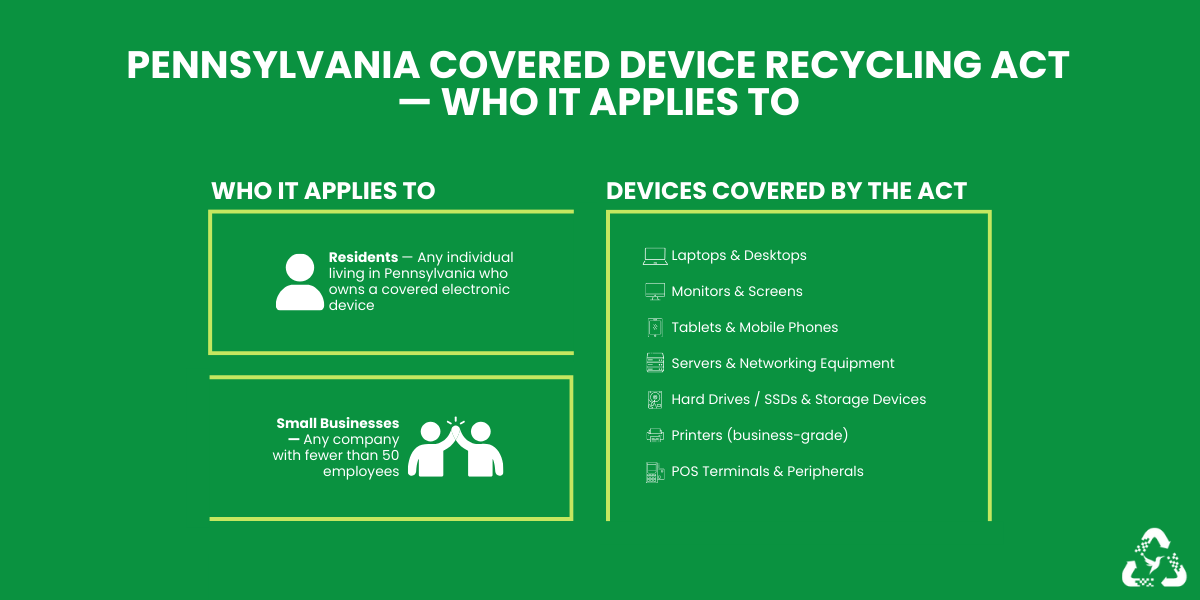
In Pennsylvania, the Covered Device Recycling Act applies to both individuals and small businesses.
This means:
- Residents: Anyone living in the state who owns a covered electronic device must follow the recycling rules.
- Small Businesses: All companies with fewer than 50 employees must adhere to the rules and conditions.
Violation of these laws can result in serious consequences. First-time offenders can face fines of up to $1000, while repeat offenders can face fines of up to $2000. But that’s not all. The responsibility is not just for the residents, but manufacturers and retailers are also equally, if not more, responsible. They are required by law to run recycling programs, and if they fail to comply, the fines are hefty. $10,000 for the first violation and $25,000 for repeat offenses.
Senate Bill 856, currently under consideration, aims to strengthen this system, expand the definition of covered devices, increase access to drop-off sites, and implement an improved Extended Producer Responsibility model. With this approach set in motion, residents and small businesses would be able to comply without hassle.
What Electronics Are Off Limits?
The state of Pennsylvania bans throwing certain electronics in the trash. These ‘covered devices’ are usually everyday consumer electronics that are harmful to the environment.
What Are ‘Covered Devices’?
Covered devices are consumer electronics that fall under the ‘Covered Device Recycling Act’. These devices are further broken down into three main categories.
| Category | Specific Devices Included |
| Covered Computer Devices |
Desktop PCs, Laptops, Notebooks, and Computer Monitors (LCD, LED, etc.) |
| Covered Television Devices |
All types of TVs including CRT, Plasma, LCD, LED, DLP, and other consumer-grade models. |
| Peripherals |
Keyboards, Mice, Printers, and Scanners. |
To ease the burden on consumers, manufacturers are required to collect and recycle these items, thereby making producers accountable.
Upcoming Changes Under Senate Bill 856
As mentioned, the Senate Bill 856 is designed to modernize Pennsylvania’s e-waste system. Here are some provisions:
- More devices have been added to the list of covered electronics, including e-readers, tablets, printers, portable music players, DVD players, and VCRs.
- Extended Producer Responsibility, with manufacturers taking on greater funding and recycling programs.
- 95% of Pennsylvanians must live within 10 miles of a free e-waste drop-off site.
HOW Can You Avoid Penalties?
While the rules are strict, recycling your old electronics properly in Pennsylvania doesn’t have to be complicated. Here is a simple guide to help you avoid penalties:
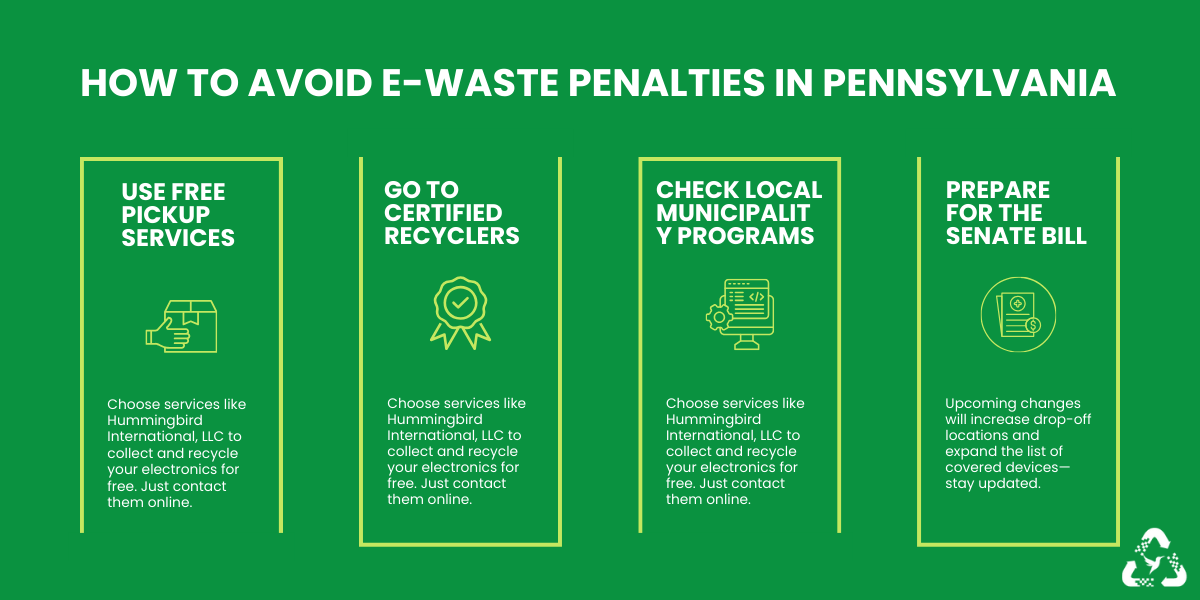
Opt For Free Pickup Services
If you don’t want the hassle, go for free pickup services like Hummingbird International, LLC. They collect and recycle your e-waste so you don’t have to dispose of it yourself. All you have to do is contact them via website or email.
Certified Recyclers
If you have heavier electronics, it is best that you take them to certified recyclers. These facilities follow strict environmental standards and may charge a small service fee, depending on the device.
Check With Your Local Municipality
Towns may offer curbside electronics recycling or have designated drop-off locations. It is best to check the schedule and accepted items.
Plan Ahead For The Senate Bill
Once the Senate Bill is implemented, manufacturers will be required to ensure more accessible drop-off locations and expanded device coverage.
If you want to dispose of your e-waste easily, conveniently, and at no cost, Hummingbird International, LLC has you covered. Just reach out through our ‘Contact Us’ page or send an email to contact@hummingbirdinternational.net.
Are YOU Obeying the Law?
Are you abiding by the Pennsylvania ‘Covered Device Recycling Act’? Or are you guilty of violating it? If so, then it still isn’t too late to make amends and avoid getting penalized.
If you want to dispose of your e-waste easily, conveniently, and at no cost, Hummingbird International, LLC has you covered. Just reach out through our ‘Contact Us’ page or send an email to contact@hummingbirdinternational.net.
FAQs
When will the Senate Bill 856 take effect?
If passed, the expanded program under SB 856 is tentatively scheduled to begin on March 31, 2026.
Why should I follow recycling rules?
Proper recycling can keep toxic materials like mercury and lead out of landfills. This, in effect, protects water, soil, and the environment.
Who is responsible for recycling electronics, me or the manufacturers?
Both. Both residents and small businesses must follow proper disposal rules. But manufacturers also have legal responsibilities, including collection programs and proper recycling.


Leave a Reply