Many organizations underestimate how quickly enterprise IT equipment loses value. Within the first few years of deployment, hardware such as laptops, servers, and networking devices can lose a significant portion of their resale value. This is largely due to rapid technological advancements and frequent product refresh cycles.
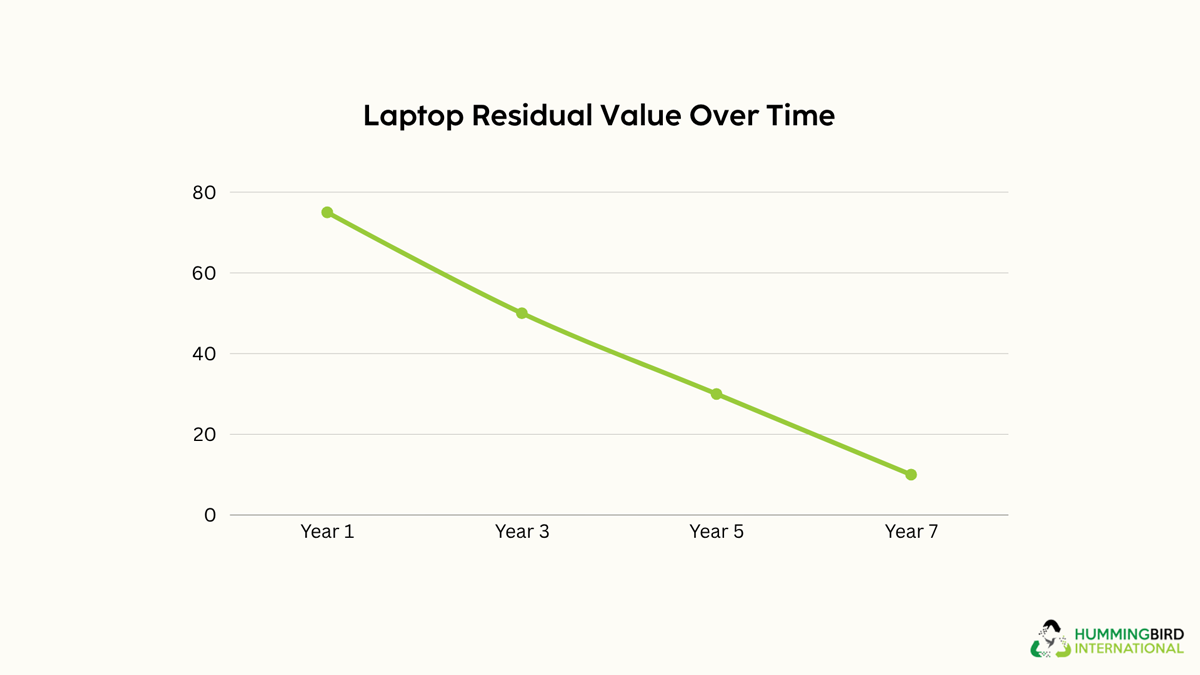
This drop follows the residual value decay curve, which shows how the market value of IT assets goes down over time. Most of the time, the biggest drop in value happens early on, well before the equipment is no longer useful.
For companies with many IT assets, it’s important to understand this value decay. When an organization decides to refresh or dispose of its IT assets, it can significantly affect the residual value it recovers from old equipment. Understanding the full IT asset lifecycle management process helps organizations determine the optimal time to refresh, remarket, or retire enterprise hardware.
- What Is the Residual Value of IT Equipment?
- Understanding the Residual Value Decay Curve
- Typical Lifecycle of Enterprise IT Hardware
- Why Enterprise IT Equipment Loses Value Quickly
- Key Factors That Influence Residual Value
- Using the Residual Value Curve for IT Asset Strategy
- Conclusion
- Frequently Asked Questions
What Is the Residual Value of IT Equipment?
Residual value refers to the estimated market worth of an IT asset at the end of its useful life or lease period. It represents the amount an organization can potentially recover through resale, IT asset recovery, or recycling once the equipment is no longer required for internal operations.
In enterprise environments, residual value is an important part of planning the lifecycle of IT assets and making financial forecasts. When companies upgrade or retire hardware, the remaining value of those assets can help pay for new ones, support sustainability efforts, and be part of overall IT asset recovery strategies.
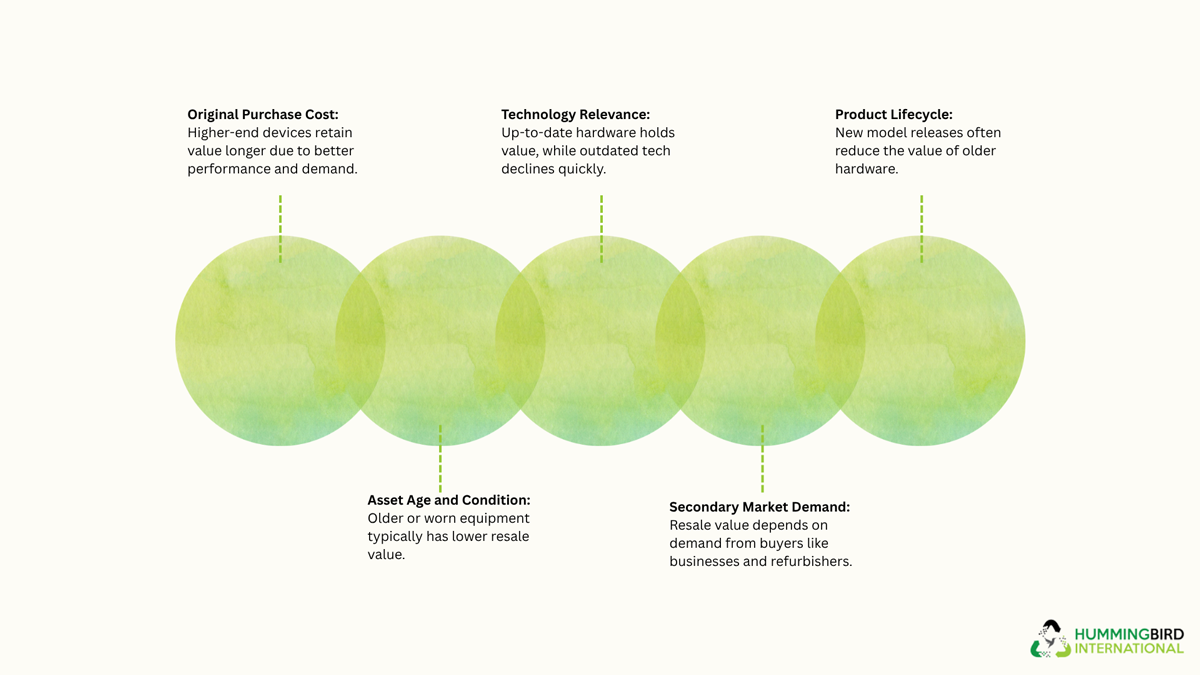
For enterprise hardware, residual value is influenced by several key factors:
-
Original Purchase Cost
Higher-end devices with better specs tend to keep their value longer because they are still useful in secondary markets.
-
Asset Age and Condition
Older equipment usually sells for less, especially if it shows signs of wear or doesn’t work as well as it used to.
-
Technology Relevance
Hardware that still works well tends to stay in high demand, while outdated components quickly lose market interest.
-
Market Demand for Secondary Hardware
The secondary IT markets change based on what small businesses, refurbishers and new markets want. High demand can make resale prices stable for a short time.
-
Product Lifecycle and Manufacturer Releases
When vendors release new hardware generations, previous models often experience a rapid decline in resale value as buyers shift toward newer technology.
IT hardware usually depreciates much faster than other types of business equipment because technology evolves so quickly. So companies that delay asset disposition may lose a lot of money that they could have made. Knowing how residual value changes across the hardware lifecycle helps businesses plan refresh cycles and disposition strategies more effectively.
Understanding the Residual Value Decay Curve
The residual value decay curve shows how the market value of IT equipment declines over time. Instead of depreciating evenly, enterprise hardware typically loses value most rapidly during the early years of its lifecycle before the rate of decline slows as devices approach end-of-life.
In most enterprise environments, IT equipment follows a depreciation trend similar to the following:
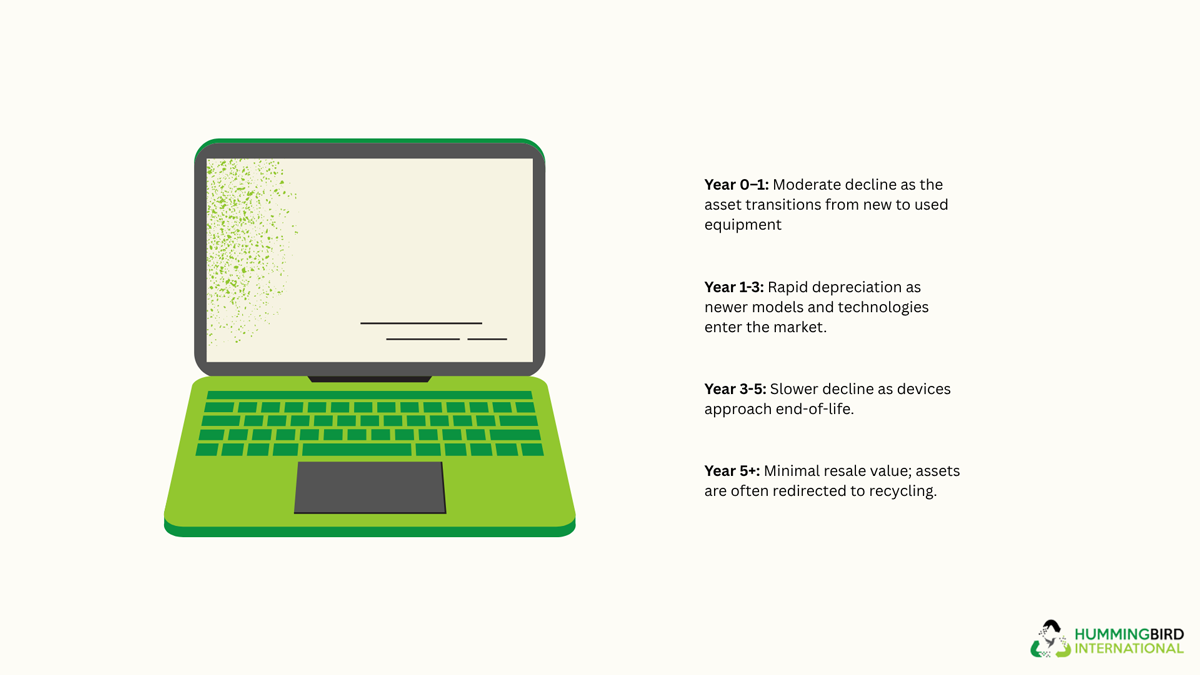
| Asset Age | Typical Value Trend |
| Year 0–1 | Moderate decline as the asset transitions from new to used equipment |
| Year 1–3 | Rapid depreciation as newer models and technologies enter the market |
| Year 3–5 | Slower decline as devices approach end-of-life |
| Year 5+ | Minimal resale value; assets are often redirected to recycling |
Because a large portion of resale value is lost within the first three years, many organizations align refresh cycles within this window. This helps them to maximize recovery value while keeping their infrastructure up to date.
For example, many companies that use Apple MacBook computers replace them every three to four years. When Apple introduced its Apple Silicon processors, older Intel-based MacBooks saw a noticeable drop in secondary-market demand.
Organizations that sold these devices before the transition captured stronger resale prices than those that waited until the new generation became widely adopted.
Typical Lifecycle of Enterprise IT Hardware
Depending on performance requirements, technological advancements and market turnover, different types of IT equipment lose value at different rates. As hardware ages, it becomes less useful and less valuable to sell.
In enterprise environments, typical lifecycle ranges vary by asset type:
- Laptops and desktops generally have a useful lifecycle of 3–5 years. After that, performance begins to degrade, or they struggle to handle updates to software and operating systems.
- Servers and networking equipment typically remain in service for 5–7 years, depending on workload requirements, infrastructure upgrades and vendor support timelines.
These lifecycle expectations influence how organizations structure enterprise IT refresh cycles and long-term infrastructure planning. Devices retired earlier in their lifecycles often have a better chance of being resold, while equipment that remains in service longer than it should tends to experience a sharp decline in market demand and recovery value.
Many big companies that use Dell Latitude or HP EliteBook laptops have standard refresh cycles of about three years. These devices usually keep their value better when they are sold again during this time because they still meet the needs of small businesses and the market for refurbished devices.
Why Enterprise IT Equipment Loses Value Quickly
There are a number of factors in the industry that speed up the value decay in enterprise technology. IT hardware is different from most other business assets because it operates in a rapidly evolving ecosystem where performance standards, software requirements and product innovation changes take place all the time.
Because of this, the resale value of business equipment can decline quickly, particularly during the early years of deployment.
For instance, in regulated industries like healthcare, outdated equipment must be retired securely while maintaining compliance with strict data protection standards.
-
Rapid Technology Advancement
Continuous improvements in processing power, storage capabilities and energy efficiency quickly reduce the relevance of older hardware. Devices built on older architectures may not be able to keep up with evolving performance requirements as new technologies become standard across businesses.
When new generations of processors come out, data centers that use older Intel Xeon servers can quickly lose value when they try to sell them.
Companies that retire old hardware before these upgrades often get more money when they sell it. Because buyers usually want systems that work with newer software, security features, and infrastructure standards.
-
Manufacturer Product Cycles
Hardware vendors regularly introduce updated models with improved specifications and capabilities. Each new product generation shifts market attention toward the latest devices, gradually reducing demand for earlier versions.
Over multiple product cycles, this progression pushes older equipment further down the resale value chain as newer alternatives become widely available.
-
Market Supply and Secondary Demand
The secondary IT market is highly sensitive to supply levels. Large-scale enterprise refresh programs can put a lot of the same devices into resale channels at the same time. When supply increases faster than buyer demand, resale prices typically decline.
For companies that are disposing of equipment after major refresh cycles, this market dynamic can have a big impact on the recovery value.
-
Asset Condition and Operational Wear
The physical and functional condition of IT equipment also influences resale potential. Components such as batteries, storage devices and cooling systems gradually degrade with prolonged use.
Devices that remain well-maintained and fully functional typically retain stronger resale value, while heavily used equipment may attract lower offers in secondary markets.
-
Vendor Support and Warranty Status
Manufacturer support policies can further influence the resale value of enterprise hardware. Devices that still fall within vendor warranty or support programs are generally perceived as lower risk by buyers.
Once hardware moves beyond its supported lifecycle, organizations may face reduced demand and lower resale prices due to potential maintenance and compatibility concerns.
Key Factors That Influence Residual Value
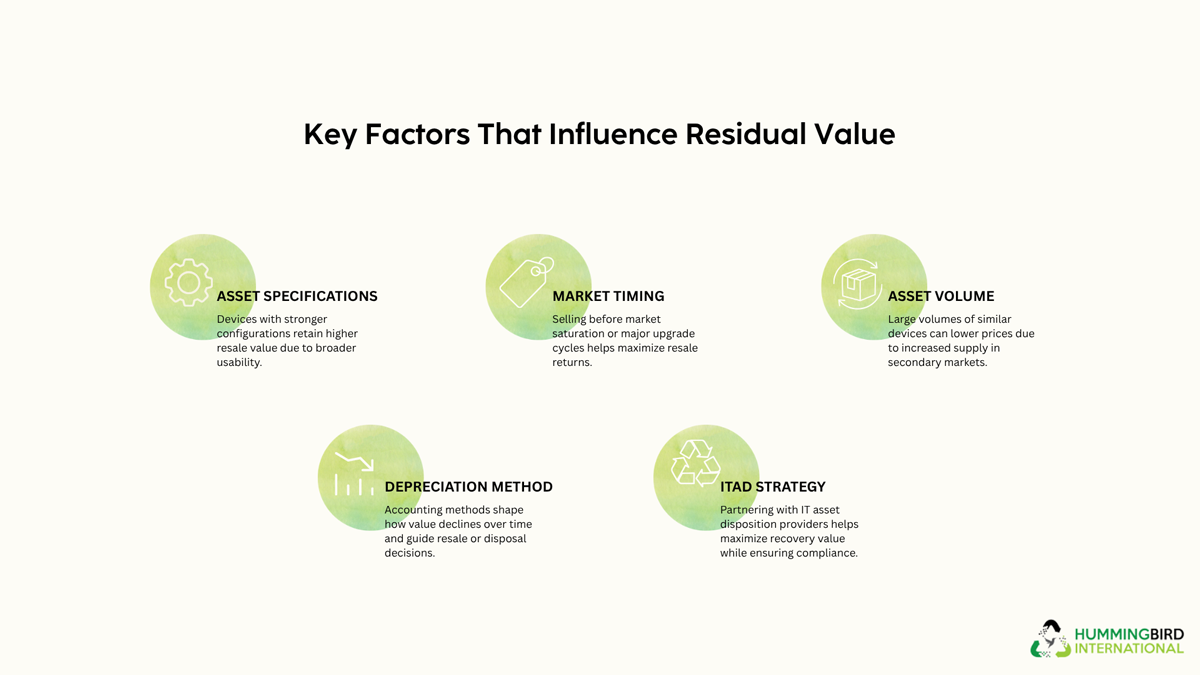
The residual value decay curve usually follows a set pattern, but there are a number of factors that can impact how quickly an asset’s market value declines. The factors affect both how many people want to buy used equipment and how much money organizations can make by reselling or remarketing it.
-
Asset Specifications
Hardware configuration plays a significant role in determining resale potential. In secondary markets, devices with faster processors, more memory or better storage tend to stay relevant for longer.
Because these specifications support a wider range of workloads, the refurbished hardware buyers and smaller organizations are often willing to pay higher prices for well-configured enterprise equipment.
-
Market Timing
The timing of asset disposition can strongly influence recovery value. Equipment sold while demand remains strong in secondary markets typically generates higher returns than devices retired after newer models have already saturated the market.
Organizations that plan refresh cycles strategically—often before large industry-wide upgrade waves—can sometimes capture stronger resale prices for their equipment.
-
Asset Volume
The quantity of assets introduced into resale channels can also impact pricing. When large numbers of identical devices enter the secondary market simultaneously, supply may exceed buyer demand.
This supply imbalance can drive down resale prices, particularly for commonly deployed enterprise hardware models.
-
Depreciation Method
Accounting practices also affect how organizations track and report asset value over time. Common depreciation methods, such as straight-line depreciation and declining balance depreciation, allocate value loss differently across an asset’s lifecycle.
While these accounting models primarily influence financial reporting, they also help organizations estimate when equipment will reach the point where resale, remarketing, or recycling becomes the most practical option.
Many organizations also rely on enterprise ITAD partnerships to maximize recovery value while maintaining compliance and transparency during the disposition process.
Using the Residual Value Curve for IT Asset Strategy
Organizations that understand and monitor residual value decay can align their IT asset management strategies more effectively. By recognizing when equipment loses value most rapidly, enterprises can make more informed decisions about refresh timing, asset disposition, and long-term infrastructure planning.
-
Optimizing Refresh Cycles
Companies can often recover more of the asset’s remaining market value by replacing equipment earlier in the value-decay curve. Refreshing hardware before it starts to lose value quickly can also help keep performance up, lower the risk of needing repairs and make sure it works with modern software environments.
-
Planning IT Asset Disposition (ITAD)
A well-planned IT asset disposition strategy lets businesses get the most in return for their devices before they lose all their value. If you align hardware refresh programs with remarketing channels, you can safely process, refurbish, and include certified data destruction to eliminate any risk of data breaches.
-
Budget Forecasting
Knowing how depreciation works helps you plan your finances more accurately. Finance teams can better plan future technology investments by predicting when assets will depreciate. This helps them better estimate replacement costs, resale recovery potential, and long-term capital expenditure cycles.
-
Supporting ESG and Sustainability Goals
Strategic asset disposal can also help companies become more environmentally friendly. Remarketing usable equipment helps devices last longer and cuts down on electronic waste. This supports bigger environmental, social, and governance (ESG) goals and encourages responsible technology management.
Regional regulations and sustainability goals are shaping how organizations manage IT asset disposal.
Conclusion
Enterprise IT equipment depreciates predictably due to new technologies, product refresh cycles, and shifts in market demand. The residual value decay curve shows how quickly hardware can lose its resale value, especially in the first few years of its life.
Organizations can better plan when to refresh their IT assets, when to retire them, and how to budget for future technology investments by understanding this pattern. Organizations across New York are increasingly adopting structured ITAD strategies to maximize value recovery. This technique also helps with efficient and long-lasting hardware lifecycle management.
Frequently Asked Questions
What is the depreciation rate for IT equipment?
IT equipment is a high-value investment for companies and is treated as a capital asset. It is typically depreciated over three years at an annual rate of 33.33%, after which it is generally considered obsolete and ready for replacement or disposal.
How to calculate depreciation with residual value?
Annual depreciation is calculated as (number of periods in a year ÷ total periods in the asset’s useful life) × (asset cost − residual value). Depreciation per period is then found by dividing the annual depreciation amount by the number of periods in a year.
Why does IT equipment lose value so quickly?
IT equipment loses value quickly due to rapid technological advancements, frequent product upgrades, and shifting market demand. Newer, more efficient models make older hardware less desirable, causing steep depreciation. Especially within the first few years of deployment, when value declines the fastest.


Leave a Reply